My employer just started doing daily reauth for all microsoft logins (teams, ...). The worst thing is that it's just 24h not start of day, so it may just be five seconds before you want to join a meeting.
They haven't found the setting for mobile yet, so I might just stop using desktop teams.
I'm not so sure about memory actually being the bottleneck for these 8 core parts.
If memory bandwidth is the bottleneck this should show up in benchmarks with higher dram clocks. I can't find any good application benchmarks, but computerbase.de did it for gaming with 7800MHz vs 6000MHz and didn't find much of a difference [1]
The apple chips are APUs and need a lot of their memory bandwidth for the gpu. Are there any good resources on how much of this bandwidth is actually used in common cpu workloads? Can the CPU even max out half of the 512bit bus?
Primary energy consumption isn't a good indicator for this, as it also includes lost energy.
If you replace a 50% efficiency coal power plant with wind or solar you'd reduce the primary energy by half but could still get the same amount of used electricity.
Nice improvements! I'd be interested to see how much overhead tailscales magicsock adds and what a flamegraph after the change looks like. Mostly crypto or still a lot of networking syscall time?
I was planning to build something similar with esp32 until i found the emporia.
It's a bit of a hassle to install (don't think anything can be done about that) and I didn't really like the official ui, but it works great with home assistant / esphome. [0]
There are small bulges on the bottles which get worn away and allow making a rough estimate of uses. The german wikipedia link above has a a little bit more detailed explanation
There are some benchmarks of mitigation impact on Phoronix [1]. These benchmarks are only for mitigation sensitive workloads so real world impact will be lower.
You can't really compare TDP and turbo clocks between AMD and Intel. [1]
The 9900k draws 168W at full load and is also specified for 95W TDP. This chip is likely going to use more.
A 3900X draws 142W for comparison. (12 cores lower clocks 7nm)
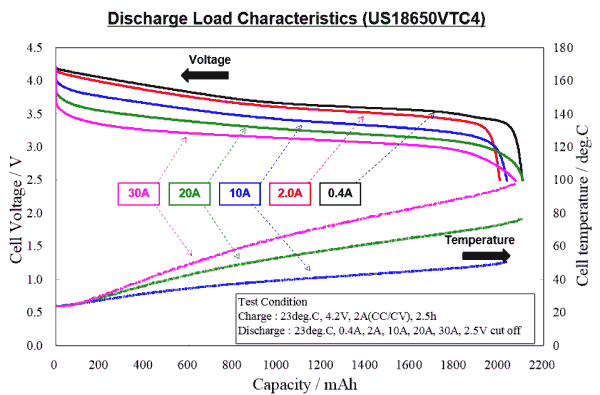
All of the electrical systems waste more energy if you drain them faster. To drain them faster you need higher currents which lead to higher waste power. Waste power goes up with the square of the current (P=I^2*R). This is most apparent in batteries heating up due to their internal resistance. Here's [1] an 18650 lithium cells discharge graph at different currents.
I wonder if charging phone charging at 95% actually gives better battery lifetime. It leads to your battery cycling between 95% and whatever state of charge you start charging at again. If you charge up to 100% your phone will stop charging, but use power from the charger bypassing the battery therefore keeping the battery in better shape.
Charging to 80% and keeping it there by just letting the charger supply the operating current would probably be best if phones supported it.
They haven't found the setting for mobile yet, so I might just stop using desktop teams.