You have to disguise it, I suppose. Just make a MUD about process management things.
This will uniformly handle both you authentication needs and long standing-processes. It is only a matter of thinking up the world.
The reason this is my recommendation, is you don't seem to be interested in graphics, you want to cut them out and focus on the marrow. This is a text system.
And, you are facing a massive design challenge, this is many years of work if you want success.
How?
Well, this thing you have here "average=AVERAGE([1,1,2,3,5,8]) ECHO(average)" can become a very large device:
"Refinery is a container, it contains the averaging station, that is connected via pipe to an echoing station...
Or a very tiny device:
"User inventory contains a data pipe named echoAverage. The pipe consists of two parts, a number accumulator, and a number printer. It accepts a list of numbers and immediately returns response."
Now, let me add, you have two ways of thinking about data pipes.
The first way is where each element of a pipe is a well defined program such as "Average", "Echo". Blender has this, they have little boxes for everything you need to wrangle nodes.
And the second way, is synthetic, used in Node.js and the old languages, it is clean, and PVC white. Here you don't have components, can you believe it? No components, pure pipes. So you have, source, destination, tee (splitter), filter (drop packets), transform (map/mangle), and reduce (accumulate, queue).
In the second way you first create a beautiful data network made of tees, filters, reducers and transformers, and then you attach functions, so you would say:
and reducer1 function = take 10 nubers, or collect until
transformer1 function is return add values and divide
transformer2 function is echo input value, return perhaps null
So in the first approach you make a network of functions,
and in the second approach you first build pipes and then attach functions.
In the MUD, I would build the pipes first, and then come in with unit tests, which would instantly fail. And then I'd make a thing that lists all the failures, and that would serve as a todo.
Now, authentication specifically, I would go for DOOM, as a heads up, and because it is funny. And when you are logged into the MUD as a developer you can enter IDKFA cheat code and get all the keys.
The reason this is not stupid, is because it is simple, and uses our navigation abilities, memory palace right? And allows you to create the graphic world in your mind, instead of in SVG.
Ask AI to create a simple MUD server for you.
Lot at Notes/Domino screenshots, or any other effort in this area, and how garbage that UI gets, it is UI gore
If you ever created a G-UI for it, it would just be Containers that can contain things (room, inventory) and things (that don't have anything inside, but may have actions, functions)
So, the developer version of your tool might as well be a heads up to Zac McCraken, or King Quest, It can be circles for rooms and lines for doors, but AI gan give you graphics.
You can also have an inform 7 Skein, which can be used as a unit test, as it captures moving though the MUD.
A security system can include a feature where hackers get eaten by a Grue, and maybe things from Neuromancer and Snowcrash.
Use an ORM, so you will get long lived processes for free, by default, as a function of the system.
This system is by design, multi-user, you can have many AI working to make the world better. And many developers, if you are that kind of a person.
Go with a regular database, but be mindful of how CouchDB works. The idea of a doc and revision and GUI, is something that would fit the old world where muds were special. It is an eventual consistency storage that you can just rsync folders.
If I was making a MUD I would develop it on Probably a RPI4 or equvalent SBC, but, I would try to see what it would take to get it all going on an RPI Zero ... it is a world of text, it will tell you when your MUD is slow. And when you bring it to modern machines, you can laugh at everybody else's performance.
Can't use Java here, so ANSI C or just something slightly above it, that is almost as fast.
Because you seem to be rejecting graphics, make it fast.
In context of creating hyper useful applications low code means 5 things.
1
Process manager, where you think in terms of users. Each step is a state machine. Ex: Anonymous visit has signup and contact. Registered user has update profile, upload video. To understand what process management means read up on the Mechnical Turk that played chess, and understand that a self checkout machine occasionally backed by a cashier is the same thing. Then realize you can email people asking them to do a task. And now you are programming not just with a CPU, but AI, and Humans in the circuit as well.
2
Drag and Drop Web page designer, here each of the states above, are expressed as web pages, that can shift state via UI interaction. ex. Clicking update profile, or upload video buttons. Think HyperCard, and look at the modern Bento Box Web Page Builders.
3
Visual Relational Database Builder, here you define tables, and their relationships, the form designer below will use those to help you make forms. See File Maker.
4
Form designer, just think of the form as a complex UI component. But, the button here, does not immediately shift state. So signup, must not shift state to registered until checks are made. Here a drag and drop visual programming language comes in to picture.
5
Drag and Drop Visual Programming Language, the click of a button is interpreted as a source of an object stream. Think packet oriented programming, of reactive functional programming, or RxJs, or Node-RED.
To answer your question: you evaluate a low-code builder by the ease with which it can generate entire website applications. And by generate, I mean code generation as well, because you want these programs to emit beautiful code that is indistinguishable from hand made code. For code generation see yeoman, especially AST parsing and that nifty var function: https://yeoman.io/
And of course any one of the 5 above is a good test, but all 5 in harmony are better.
As to non-visual/tui tools, its bash. shells are low code tools take a look:
https://nodejs.org/en/ and http://electron.atom.io/ Node is the server-side of JavaScript and Electron the cross platform desktop app (also JS and compatible with node). People have a lot to say on the subject of what is worth learning. I learned ASP/Perl/Java and I am not using them today, I still love them to bits, but there is no time/space for it today. Worth learning just may mean "what will be fun to use", meaning "what can you grow with today, that will take you to fun places in 2027". Can you see a future without the Web Browser? Can you see a Web Browser without the language that enables the Browser today? To be fair, ask is JavaScript evolving? And it is. ES6 is OK, it is the right path to take. Promise/let/const/Class and the arrow functions have fixed a lot of it. HN had RxDB on the front page today: https://github.com/pubkey/rxdb I paused when looking at "..for these plattforms" which listed: browsers, nodeJS, angular/ng2 (TypeScript), react, react-native, ionic, cordova / phonegap, nativescript, electron.
You learn what is evolving, and you grab onto it, and evolve right with it. This is easy territory for flame wars and "whatever fits you"/"there is no best stack", but that's not the full picture.
Your survival depends on what you know, life is full of surprises, death in family, cancers, car accidents, addiction, breakups, and depression.
Imagine a warrior, ask him, "what is the best weapon?" and can you really imagine him saying "There is no best weapon", no, s/he would never say that.
You go on the most popular code hosting website, you sort by number of stars and begin at the top.
To give you a specific answer "iOS, Android and a Web App" in context of "Inventory Management - Dealer Management - Accounting - Payroll - Analytics" is Apache Cordova, (iOS, Android, and others), you use npm/node this way you will have one code base, you won't have to write the same code in multiple languages (just imagine scaling a live data sync requirement in one app and then standard REST in another -- keep it all in one language, or you will fail.)
"Inventory Management - Dealer Management - Accounting - Payroll" is all pretty simple (but, please explore ideas like http://vorpal.js.org/ just to develop your API before getting to G-UI, finish your programs in the terminal first.
Don't pretend programs are written GUI first, they are not. GUI is a leaky abstraction to say the least.) Don't fall for redux, relax and use https://github.com/mobxjs/mobx for actual GUI, (by the time you get to this part https://vuejs.org/ will rule)
And for your Analytics front-end D3, it is a departure from standard JavaScript but it has a lot of love inside.
Finally, remember develop commands/API first, get your apps working in the CLI and you will finish your program before starting it. Think about using the power of Unix (https://www.npmjs.com/package/commander), for the love of all that is mighty think about IRC, NOBODY! has time to learn to use your apps/GUI and NOBODY! ever needed to learn how to use Siri, so create a Command Line Interface version of your program and before you jump to React/Vue meditate over https://hubot.github.com/ and programs like Siri.
Finally, if I was facing your requirements, I would build a wiki/forum where your users would interact with bots. Over time I'd rip put some of the robotic guts and boldly go where humanity needs to be headed, I'd replace them with what I call Artificial-Artificial Intelligence, networks of Human Mechanical Turks where anybody could participate.
Neural networks are easy to train, but they are also easy to trick. Nothing will beat a random sample of Humans from across the world reaching a consensus on a tough decision.
In closing, People, Real Hearts, Human Minds, powering your network would share in your profits, and you'd do your part in battling what ails us all, World's Poverty.
If a mother in Rwanda and a Boy in India participating in your Mechanical Turk can find their way out of poverty, by helping your to detect fraud in your circuit. Then, you did your part, to help Humanity grow.
Hey, I made something similar, a pure shell version with ImageMagick here: https://github.com/fantasyui-com/mockup (MIT) I decided to punch holes in the device image and then distort the user's image to fit the hole. See lib/laptop1/source.bash to glance what it takes to fit an image into a laptop similar to yours with shell and ImageMagick alone. If I had to do it again, I would use HTML/CSS to assemble the graphics and then screenshot it with something like pageres (see npm). It is easy to critique our behemoths, when someone tells you using Electron/AngularJS in a title bar is too heavy, remind them that Electron/JavaScript has SVG, Canvas, fantastic (mind blowing) Web Audio and that's just to scratch the surface. If I may suggest a new idea for you do the drum machine like here https://github.com/maryrosecook/drum-machine <3
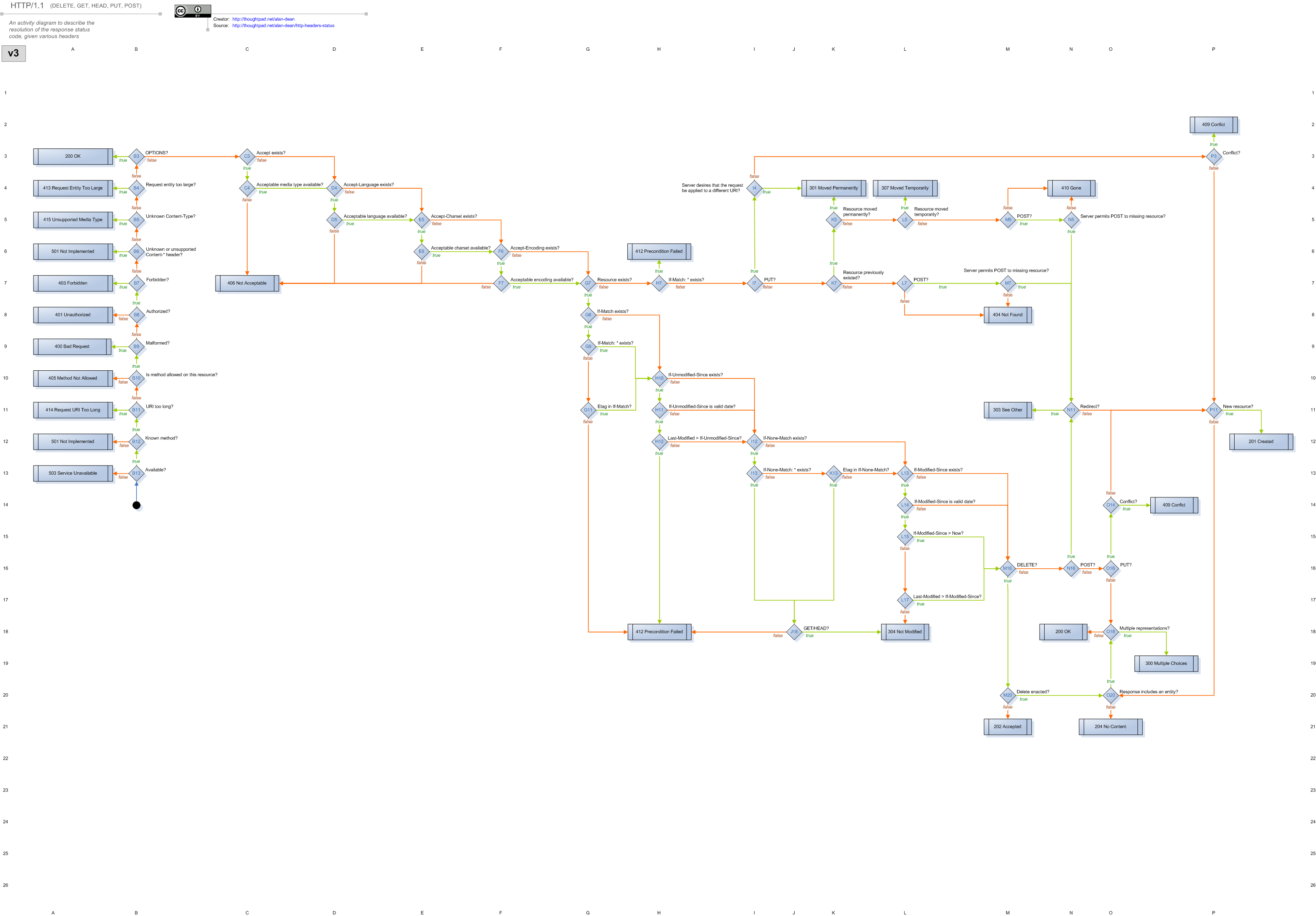
https://lmatteis.github.io/react-behavioral/