What Is Kickstarter For? Video Games(blog.airbriteinc.com)
blog.airbriteinc.com
What Is Kickstarter For? Video Games
http://blog.airbriteinc.com/post/66886152025/what-is-kickstarter-for-video-games
Kickstarter is most effective at financing video and tabletop games, which have raised $189 million of the total $861 spent on the platform. More than $2 out of every $10 spent is on interactive entertainment. Backers are people who play.
10 comments
You're welcome to say that based on the money, Mr or Mrs Airbrite, but I'll continue to use it to publish my comic books. And so will a lot of other people - I've seen statistics that the 'comics' category of Kickstarter is now having more money flow through it than the #2 publisher of comics in the US.
YMMV.
I also suspect that the people who make and maintain Kickstarter would disagree with this, given how they've taken steps to largely remove hardware projects from the site. They deliberately left a lot of money on the table by doing this.
YMMV.
I also suspect that the people who make and maintain Kickstarter would disagree with this, given how they've taken steps to largely remove hardware projects from the site. They deliberately left a lot of money on the table by doing this.
Mr. Airbrite here. We are saying it based on the money and on total backers, where the 100K video game projects also come in first.
We don't want to discourage you from publishing your comic books. We like graphic novels, and we're going to analyze the category later to see what pledge levels work best.
Looking at our data, I see the average 100K comic book project gets about 3900 backers, and from them, about $62 per head.
We don't want to discourage you from publishing your comic books. We like graphic novels, and we're going to analyze the category later to see what pledge levels work best.
Looking at our data, I see the average 100K comic book project gets about 3900 backers, and from them, about $62 per head.
100k comic book project? Man I'd be happy with a 10k comic book project. Although personally I designed my latest campaign to avoid digging into the pockets of a few whales - I built it around "moving more books". Promising a ton of extra junk you have to fulfill, and promising more of them to push stretch goals, is a huge trap IMHO.
YMMV, obviously. I think there's a lot more to consider about Kickstarter than "how much money can I raise".
YMMV, obviously. I think there's a lot more to consider about Kickstarter than "how much money can I raise".
It might be more interesting to look at number of funded projects rather than dollar value. Video games dominate because they are so ludicrously expensive to produce - whereas if you look at a typical art Kickstarter the asking sum is a relatively low number (you can get a lot of art done for <$10K).
Side note: I'm not sure if I really want to support another video gaming Kickstarter. With the exception of Planetary Annihilation everything I've backed has turned out far below expectations. Lots of projects shipping after endless delays and not even hitting the original bullet point promises after basically running out of money.
Side note: I'm not sure if I really want to support another video gaming Kickstarter. With the exception of Planetary Annihilation everything I've backed has turned out far below expectations. Lots of projects shipping after endless delays and not even hitting the original bullet point promises after basically running out of money.
Perhaps there's something to be said about the industries getting crowd funded. The video games industry is notorious for being dominated by AAA publishers spending Hollywood-level budgets on mass market blockbusters (that often don't recoup costs) and turning away a lot of traditionalist, purist, or hardcore gamers. Kickstarter has been an excellent platform for indie gamers trying to revive older genres, or perhaps engage in experimental forms of video games.
I'm a backer of Chris Robert's Star Citizen. The big appeal for crowdfunding for both Chris and all of us supporting him and the team at CIG is that he gets to make the game he wants, we trust Chris to make a great game, and anything that cuts the Bobby Koticks out of the loop is GREAT!
Hey Airbrite folks, it's a blog post, it shouldn't be a blank page with NoScript in effect. That is a failure on your part.
Regarding the substance of the article: I'd argue that you're introducing a bias towards the outlier projects and ignoring projects (like Egypt Urnash's upthread) that don't need huge budgets. Tabletop gaming and comics have both set up thriving Kickstarter communities. Videogames make a big splash on Kickstarter because their fixed costs are so high (which is its own separate problem - they need to invest heavily in art assets which, as patio11 put it, depreciate straight off a cliff).
Regarding the substance of the article: I'd argue that you're introducing a bias towards the outlier projects and ignoring projects (like Egypt Urnash's upthread) that don't need huge budgets. Tabletop gaming and comics have both set up thriving Kickstarter communities. Videogames make a big splash on Kickstarter because their fixed costs are so high (which is its own separate problem - they need to invest heavily in art assets which, as patio11 put it, depreciate straight off a cliff).
You might want to take into account backers' context. I believe projects related to video games attract wealthier backers who are ready to put more money. As you say it yourself, Veronica Mars raised less money than OUYA but had more backers. Therefore the backers' social and financial context could be another potential explanation of why games raise so much money on Kickstarter. An analysis of who the backers are in each category would make this blog post more relevant.
That's an interesting point. We don't have demographic data on the backers, and if KS knows, they haven't released it. Two things to think about. "Torment: Tides of Numenera" raised $4.2 million. If you look at their pledge levels, they got nine backers to pledge $10,000 or more. Yes, those people have a lot of money, but if we assume they pledged 10K and no more for their rewards, then they account for just one quarter of one percent of Torment's funds. The real pillars of the campaign were pledges in the $20-$28 range. Almost 38,000 backers signed on at that level, and their pledges totaled more than $900,000. Our conclusion is that video games are actually more dependent on the mass market than on high-end backers. We'll get a post on this out soon.
It felt like the article was just starting and then it ended; makes me less likely to follow future content. Although I seem to prefer longer-form writing than a lot of the internet, so maybe others will be satisfied.
It's a series. We're still crunching the numbers. Most people don't read past the first page online, anyway, so there's usually no point publishing long form. You being the obvious exception.
I recently played Shadowrun Returns which was funded via the Kickstarter. Although graphics were bad, on many levels it was the best game I played in a last few years. Kickstarter for games give me some hope that there will be some games reaching to niche demographics, like old school players. Majority of new games are targeted for 15 year olds with 15 seconds attention span looking for flashy graphics :(.
> Although graphics were bad
wha? Bad? That's harsh. Maybe they aren't flashy graphics, but I wouldn't say they are remotely bad.
wha? Bad? That's harsh. Maybe they aren't flashy graphics, but I wouldn't say they are remotely bad.
they look like a game from around 2000
Rose colored glasses? Yeah, it's not hyper-realistic, but saying the graphics are bad is harsh.
http://cdn.pastemagazine.com/www/articles/shadowrun%20return...
http://rpgsquare.files.wordpress.com/2012/04/final-fantasy-i...
That is the best I could come up with without taking 10 years of searching.
http://cdn.pastemagazine.com/www/articles/shadowrun%20return...

http://rpgsquare.files.wordpress.com/2012/04/final-fantasy-i...
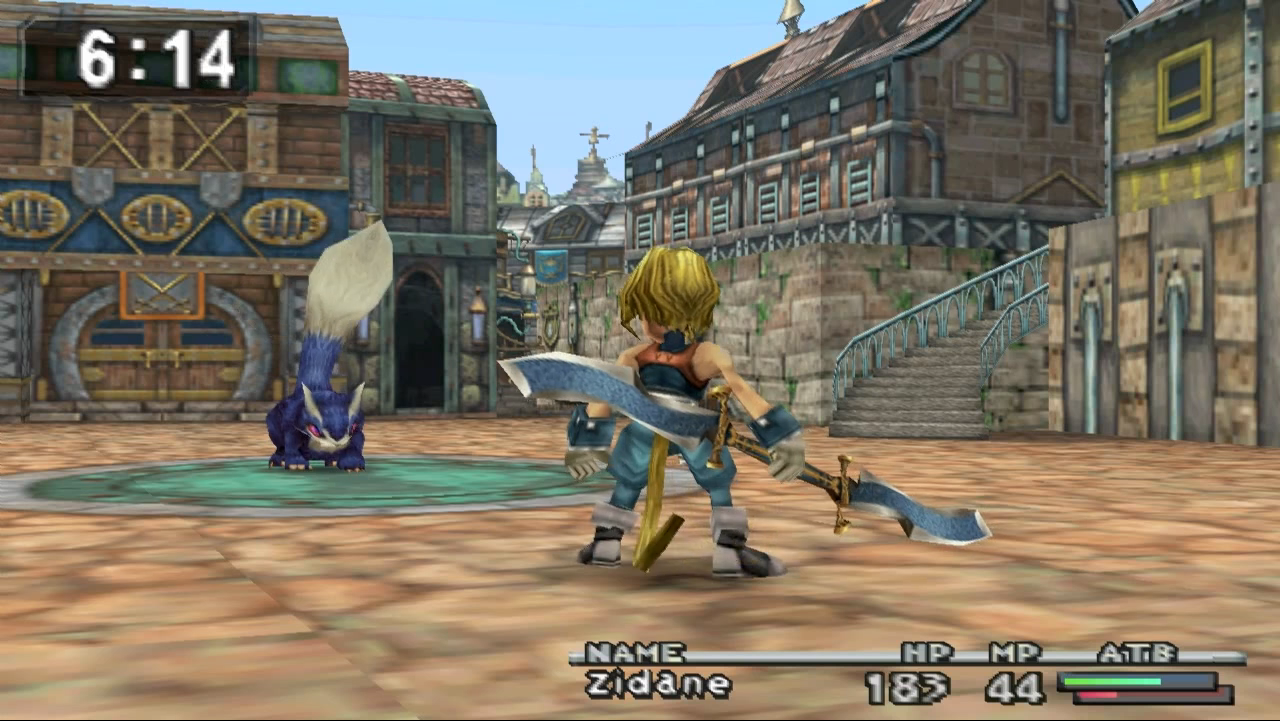
That is the best I could come up with without taking 10 years of searching.
This seems to be a more and more prevalent model for funding non-AAA games. A good proportion of the games on the front page of Steam right now are "Early Access", which work in a similar manner - funding upfront, continual development.
Kickstarter has several non-electronic consumer products I've seen make it through, as well as table top RPGs and board games.
Of the 840 projects over 100k they looked at, 718 were not for games. So, most projects are not for games.
That's true. But we didn't say the majority of projects were for games. We're just saying games do better than other projects on KS. 57% of all KS projects fail. So the number of projects in any given category is an indication of project supply but not backer demand. In a sense, it's irrelevant. We assume people are interested in what succeeds on KS, so we're only talking about the top projects. And those are the projects that attract the most money and the most backers.
> We're just saying games do better than other projects on KS.
Monetarily, sure. I'd be interested in knowing if games are successfully funded more overall, regardless of the actual funding amount, or if it's just that the money games get is larger.
> We assume people are interested in what succeeds on KS, so we're only talking about the top projects.
Well, people are interested in what succeeds, but that's different from what succeeds and what's popular. Most projects that succeed on KS fall short of your 100k minimum. How do games fair there. Is their a correlation between what a game asks for and whether it's success.
For example, it would be interesting to know if 95% of games fail if they ask for less than 50k, but over 100k, only 50% fail. And of course, their is the question of whose involved with these projects.
Anyways, I didn't mean to imply you are wrong, only that your perspective is just one perspective, and possibly self-selecting.
Monetarily, sure. I'd be interested in knowing if games are successfully funded more overall, regardless of the actual funding amount, or if it's just that the money games get is larger.
> We assume people are interested in what succeeds on KS, so we're only talking about the top projects.
Well, people are interested in what succeeds, but that's different from what succeeds and what's popular. Most projects that succeed on KS fall short of your 100k minimum. How do games fair there. Is their a correlation between what a game asks for and whether it's success.
For example, it would be interesting to know if 95% of games fail if they ask for less than 50k, but over 100k, only 50% fail. And of course, their is the question of whose involved with these projects.
Anyways, I didn't mean to imply you are wrong, only that your perspective is just one perspective, and possibly self-selecting.