I have been trying to force LLMs to work with geometries for over a month and it's so hard. Even the best LLMs have an extremely poor sense of geometric relationships in my testing. I would also stay away from mesh based CAD like OpenSCAD and go straight for build123d which operates on real solid models (BREP): https://build123d.readthedocs.io/en/latest/index.html
It took me too long to understand the difference between the two so I'll leave it here for others. Octelium operates on OSI Layer 7 and Tailscale operates on OSI Layer 3 and 4.
Google partnered with European Center for Medium-Range Weather Forecasts (ECMWF) to build weather models. Which begs the question: why didn't it partner with NOAA on its home turf?
JPEG-LL refers to the lossless mode of the original JPEG standard (ISO/IEC 10918-1 or ITU-T T.81), also known as JPEG Lossless, and not to be confused with JPEG-LS (ISO/IEC 14495-1, Transfer Syntax 1.2.840.10008.1.2.4.80), which offers better ratios and speed via LOCO-I algorithm. JPEG-LL is older and less efficient yet more widely implemented in legacy systems.
The lossless mode in JPEG-XL is superior to all of those.
I wrote a blog post about using nspawn from an Arch Linux host. The Arch Wiki shows more information about how to get a Debian base if you want that instead. Link to the wiki is at the bottom of the blog post along with more references.
Your dream will evaporate when the newcomers self organize and disenfranchise you. This foolishness and lack of critical thinking will be ultimately resolved by nature itself.
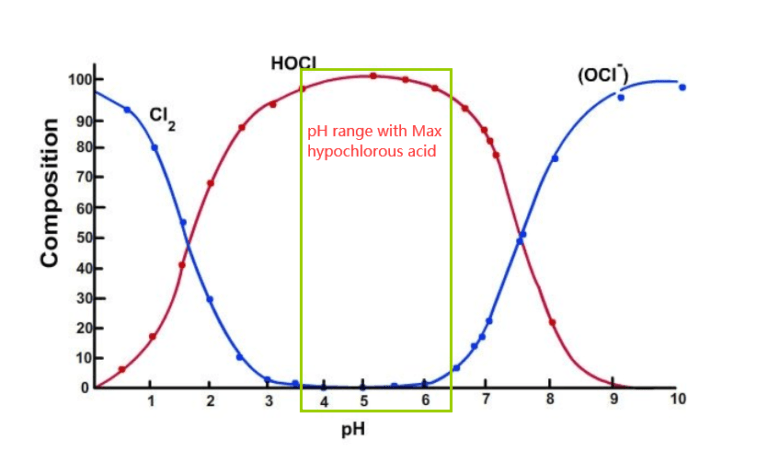
Don't use bleach when you can easily make hypochlorous acid. Hypochlorous acid is bleach but acidified and much safer to the human body than bleach. Bleach is thousands of times more toxic to humans at the same HOCl concentration. You suggest using an OCl- concentration of 2500 ppm which would be extremely high for an equivalent therapeutic use of hypochlorous acid. You can easily use a 10 times lower concentration of hypochlorous acid for the same purpose, and it would still be total overkill. You can easily make hypochlorous acid with electrolysis safely or by mixing highly dilute bleach with highly dilute acid (vinegar) with a target pH range of 4-6. If your solution pH falls below about 4 there may be chlorine gas evolution which is generally undesirable. Above pH 4 it is not significant. Given the desired HOCl dilution hardly any chlorine gas will be emitted even if working in a confined space and using an excessively low pH. I recommend the electrolysis route for use in and around the body because the route is generally free from potentially harmful contaminants which may be in your bleach products. The bleach and acid method is useful to make a general purpose deodorant and disinfectant or if you trust your bleach to be free from harmful contaminants. https://www.dstec.com.my/wp-content/uploads/2020/04/pH-for-H...
Hypochlorous acid is hundreds of times more effective than bleach as a biocide because it is uncharged and can far more readily diffuse past the lipid bilayer of microbes to wreak havoc. Somehow, humans are generally much more immune to these effects. Whereas 0.1 ppm HOCl can kill most bacteria it takes approximately 10,000 ppm to damage most human cells. It is not recommended to use much over a handful of ppm in the nose and eyes.