He's not in this to sell books. Stewart is investigating a way of life, and a means of keeping things working a long time. And he's documenting it thoroughly.
I was fortunate to read a preprint of Brand's latest. It's magnificent.
How and why do things fail? What are the cultures that lead to long-lasting products?
The undercurrent here is that Brand is behind the 10,000 year clock and has a vested interest in making things last a long time.
This book is an exploration of the world of things, how they break, and how people fix them. It's a huge effort, and Part One is right. He's been posting further work on Twitter from Part Two.
He included some sword fighting manuals that I sent that we think are the earliest written instruction guide.
We loved writing them, too! Traffic to the photo teardowns dropped and has been replaced by video. If you can help us figure out how to get people to pay attention to long-form articles again, we're all ears!
Thanks for the feedback! Fellow Tennessean here so I'm a bit embarrassed. I fixed the Make your voice heard embed (we removed a CallPower integration).
I'm working on fixing the letter now.
We built this tech when having five or six states with bills was exciting. Now, 50 states times two chambers times sometimes two or three bills has become a whole thing to keep track of it all.
Keeping all of these bills up to date across 50 states that change every year is quite the project. It's a pretty manual process right now, alas. I'd love to automate it.
Everyone else: please thread any bill year mismatch / other issues you find here, and I'll fix them!
The Toyota Sienna is the only minivan with all-wheel drive, which matters in cold climates or for the more adventerous families. It's built on the same chassis as the Highlander.
Thanks for the feedback! The storage cap indeed makes a huge difference when you have to do something quickly and then put the iron away.
In our testing, we rarely need to change temperatures. I think our algorithm does a better job of responding to the power load and flowing heat into the material than other irons. Of course, if you're changing solder then you'll need to change the temperature setting.
We built the web interface with mobile in mind. We just need a mobile browser that supports web serial. Someone else posted a WebUSB polyfill, and I'm going to check that out tomorrow.
The cap has a magnet on it that auto-homes so that really isn't a risk.
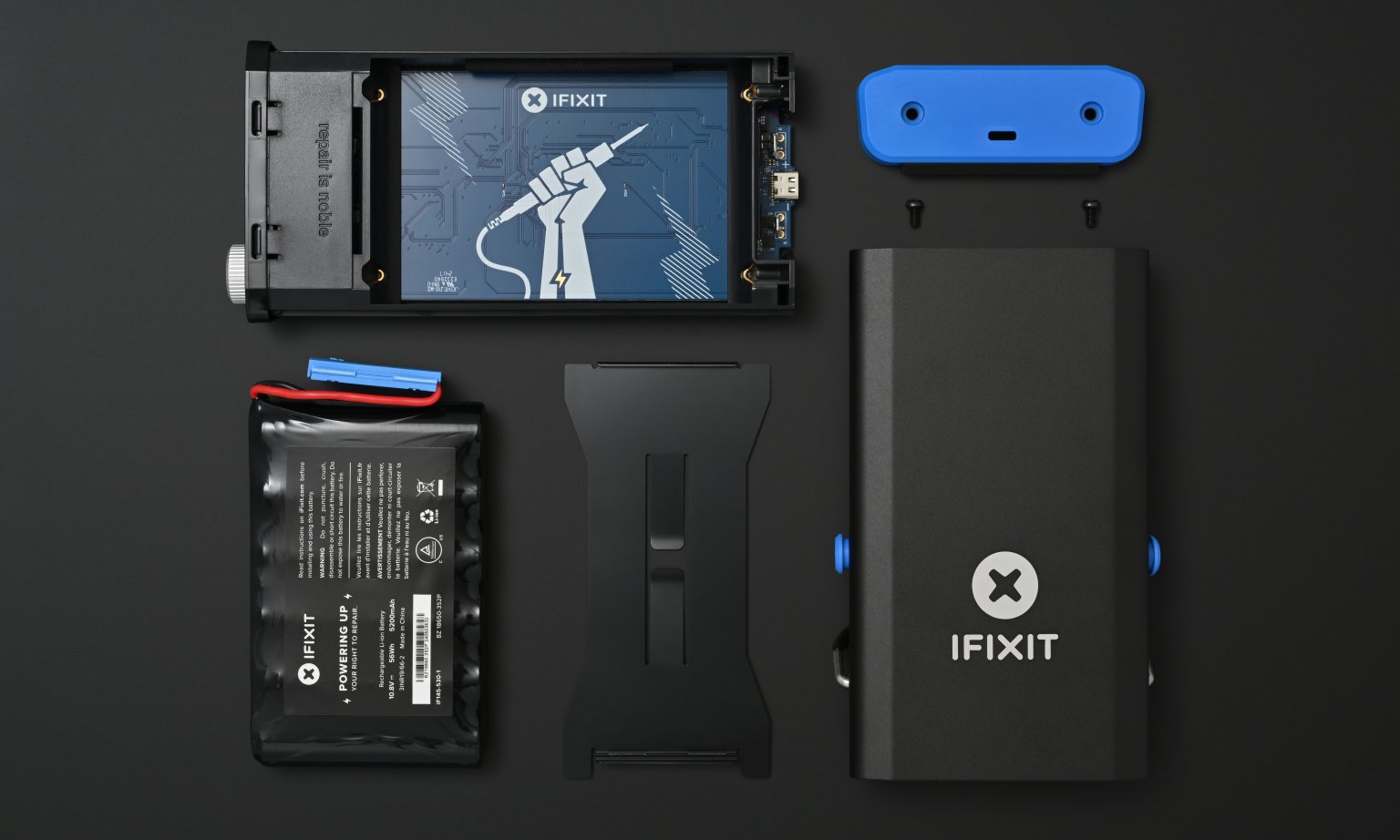
The Power Station has a 55 Watt Hour battery, which is where most of the cost comes from. It doubles as a battery bank for your phone or laptop, or any other USB-C devices in your life.
I agree with you. We wanted to use individual 18650 cells so badly! We designed the whole thing that way. We did exactly what you proposed, and built cell balancing circuitry and code. It worked great! Then we went to the safety certification bodies and they said, absolutely not, there is no way you can sell that.
We tried so many avenues to persuade them, from proposing 18650s with built-in safety circuitry to showing the safety system that we designed into the pack. No dice.
There are a variety of safety standards to blame, but the primary one is UL 1642. It needs to change. I'm planning to join the standards body to see if I can shift things.
We will also be selling a complete line of replacement parts.
I'm working right now on our distribution partners, but we'll have a variety of local and online distributors who you can also buy the system through.
Rather than designing it to change tips on the fly, we set up the Power Station to handle two irons, with two USB ports and a mounting socket on both sides.
I completely agree and love buttons and knobs. In this case, we didn't think the setting was necessary at all. It's very rare that you need to change the soldering temperature. We found that most of the reasons that people historically change their setting is because their iron isn't responsive enough to the actual workload.
With 100 Watts of power and an ultra-fast response time, you can flow the joules that you actually need into the material at the temperature you set.
Give it a try! If you still feel like you need a temperature knob, we'll refund your purchase.
We considered having a sensor to detect when the cap is installed, but found that the accelerometer met that need. The default sleep timer is 30 seconds, but I set mine to 5 seconds and it works great.
All of the settings, including the temperature setting, are available in the web interface for free. The settings persist permanently on the iron so you can use it with any USB-C PD power source that you've already got. We worked hard to make sure that the iron works well standalone from the power station.
https://www.ifixit.com/fixhub/console
Our goal here was to provide workstation-level performance in a portable form factor.
Phone configuration: I agree, that would be nice. If we can find a way to do it from a web browser on a phone, that's our preference. Otherwise we'll take a look at a native wrapper.
Agree. It's kind of like a chef's knife: a better tool makes you a better chef.
A sharp knife is also quite a bit safer than a dull knife. By heating to operating temperature in 5 seconds and rapidly pouring heat into the material, you don't have to hold the hot iron as long. As soon as you're done, pop on the safety cap and instantly shield the hot metal.
Soldering isn't remotely mainstream, and part of that is the quality of tools. We set out to streamline the entire process to make soldering as accessible as possible.