> Where is Windows' equivalent of APFS / BTRFS (or even EXT4)..? NTFS is more than 20 years old by now.
There's ReFS, but a lot of NTFS features are basically baked into the filesystem API, so replacing it is hard.
That being said, NTFS works extremely well and reliable. I don't really see a compelling need to replace it (which is always a messy transition unless you're completely backwards-compatible -- but in that case, NTFS has evolved a lot already).
As a sidenote, the blog styling, mimicking a book's typesetting is quite nice. It's a pity that this breaks down quickly where screenshots are visible. And fun usage of Ruby for annotations in one footnote. Haven't seen that in the wild yet (likely rare in non-CJK scripts, anyway).
Wikimedia Commons also requires more up-front work by the uploader to categorize the image properly, which can be daunting if you're new to how things are organized there. But yeah, for well-known objects, adding Wikidata and Wikimedia Commons links can be awesome and there are plenty of apps making use of it to show additional information.
> think for crossings StreetComplete now only asks about the actual crossing nodes, so no more duplicate quests.
It can be confusing for roads where both sides are separated or where there is a traffic island in the middle. There you have two crossing nodes (and sometimes even the footway leading over the road). But in general, I think it is very hard to actually cause trouble with StreetComplete. Furthermore, not every single quest has to be answered, although they typically only exist if there is an obvious correct answer the vast majority of the time (to not annoy users).
The overlays are intentionally a bit hidden, since they're more of a power-user feature and I appreciate that StreetComplete retains beginner-friendliness as a core tenet. But the overlays are indeed awesome for survey-type walks where you just want to make sure that all sidewalks are mapped correctly, or to see which shops are still missing.
Google can cheat a little, especially for new roads since they notice when someone is driving over it. When there was a redesign of an intersection near here, someone marked the road as completed in OSM maybe half an hour after it was opened (we have a few quite active mappers), and Google had it open about two hours later and I suspect no one changed the data directly.
As a frequent contributor myself I love StreetComplete and I wouldn't worry about it perhaps generating a few changesets more than strictly necessary (it tends to make one changeset per quest (with multiple amendments for individual answers) and also only during a certain time frame. Sure, that means that adding information to a staircase creates multiple changesets (incline, step_count, surface, handrail), but that doesn't really matter.
What StreetComplete is very good at, in my opinion, is simply QA on the ground. SC asks about features existing on the map (benches, bus stops, shops, roads, barriers, etc.) and some of them might go stale. So asking about opening hours of a shop might cause someone to look and notice that the shop is closed now, or replaced by another one, so in many cases the quests that add detail to objects have the nice side-effect that those are being looked at and reviewed whether they still exist, which otherwise does not happen often. The barrier to adding new data is often lower than fixing or removing outdated information.
And it's such a low barrier to entry, especially for people not familiar with OSM's tagging, since the UX is very well designed for beginners in my eyes (while still being useful for advanced mappers), that you can easily recommend it to people who like those kind of hobbies (e.g. geocaching, Pokémon Go). For me it was an excuse to go outside more, also to places I haven't been, during COVID-19, just to tick off another quest.
Some apps don't edit OSM directly, but rather add a note on the map for others to edit. Maybe that's what they meant.
E.g., OrganicMaps often creates these kinds of notes: https://www.openstreetmap.org/note/5377887 which for certain kinds of edits is safer than trying to directly edit. StreetComplete does the same in many cases when something no longer exists. I think, shops and other places can often be added directly, though since that has little to no ties to existing data.
But yeah, I'm using mostly StreetComplete (SCEE) when outside, sometimes Every Door and Vespucci. For offline map apps like Organic Maps it's likely not easy resolving potential conflicts with live OSM data that might be weeks or months newer than the map data in the app.
Nota bene: those end up as notes on the map which another mapper has to input manually. There's a lot of spam and dubious entries so I often no longer bother entering them, especially in places I don't know or where I cannot verify the information.
Both this and addresses is something that's really easy to survey with StreetComplete.
Google has the benefit of having their own street-level imagery for house numbers and street names, Android devices for real-time traffic info, and the ability to simply scrape web pages for shop data including opening hours. but in places with a reasonable number of active mappers, OSM is so much richer and more up to date.
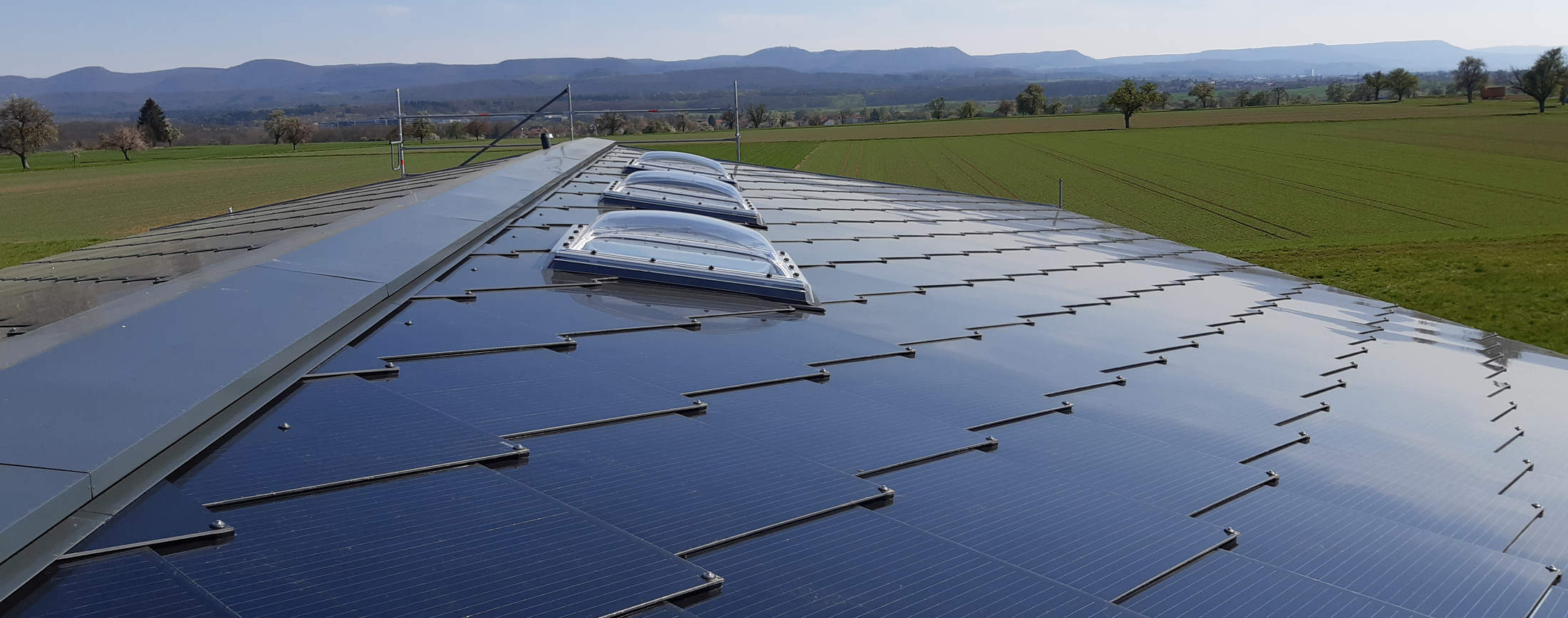
While not quite panel-sized, it's much larger tiles and there's not another roof underneath. Probably makes most sense with a new roof, though. The problem is that when a roof lasts 50--80 years, that's not a very big market just for new roofs.
This concerns Widerrufsrecht, i.e. the right to cancel an order or contract shortly after signing it. For certain services you also waive this when you get to use it immediately (cellphone service, for example), and for custom-made items it also does not apply, as in this case.
This is independent of warranty (which is something the manufacturer may or may not offer), or Gewährleistung (which concerns the vendor and is typically the easiest way of dealing with damaged or defective goods).
That only helps with multiplications by statically known word sizes (4x, 8x, etc.) and not arbitrary x·y. It can help with many smaller constant multipliers if the complete is clever, but it has to be known at compile time.
Contact, if needed: hn (at) hypftier (german tld)