Dutch cities want to ban property investors in all neighborhoods(nltimes.nl)
nltimes.nl
Dutch cities want to ban property investors in all neighborhoods
https://nltimes.nl/2021/09/02/dutch-cities-want-ban-property-investors-neighborhoods
579 comments
This is desperately needed. And not just in the major cities; this is happening in every Dutch town. Amsterdam may have prices beyond absurd, but the whole nation is burdened by this problem.
In the street I live in the capital of the northern province of Fryslân (Frisia) most homes are owned by their inhabitants, but in the past few years we've seen several houses being bought by small-time investors (who already own their own home of course, are financially well on their way, and are looking for ways to save their saving from low interest rates and inflation), who charge renters four times what my fellow homeowners and I pay for mortgage.
You never get to know the renters, because they are really only here for as long as nothing better comes along (like buying a house or social housing), and who can blame them?
Meanwhile maintenance of these houses is minimal, because the market won't really reward proper upkeep at this point; they can always sell the house for an insane price tomorrow.
It's really upsetting to see my younger colleagues stuck renting a flat, while I own my house having even paid of the vast majority of the mortgage simply because I had the luck of buying it in 2013 (a major dip in the market where paying less than the listed price was common).
For the good of society we need to put a stop to this type of speculation on the housing market.
In the street I live in the capital of the northern province of Fryslân (Frisia) most homes are owned by their inhabitants, but in the past few years we've seen several houses being bought by small-time investors (who already own their own home of course, are financially well on their way, and are looking for ways to save their saving from low interest rates and inflation), who charge renters four times what my fellow homeowners and I pay for mortgage.
You never get to know the renters, because they are really only here for as long as nothing better comes along (like buying a house or social housing), and who can blame them?
Meanwhile maintenance of these houses is minimal, because the market won't really reward proper upkeep at this point; they can always sell the house for an insane price tomorrow.
It's really upsetting to see my younger colleagues stuck renting a flat, while I own my house having even paid of the vast majority of the mortgage simply because I had the luck of buying it in 2013 (a major dip in the market where paying less than the listed price was common).
For the good of society we need to put a stop to this type of speculation on the housing market.
In the long term, the ethically right answer seems pretty clearly to me to be a land value tax [0]. But due to encouragement of home ownership [1], that's not going to democratically tenable in a lot of countries for 20+ years. Unfortunate situation.
[0] In 1879, a man asked "How come all this new economic development and industrialized technology hasn't eliminated poverty and oppression?" That man was Henry George, his answer came in the form of a book called Progress & Poverty, and this is a review of that book - https://astralcodexten.substack.com/p/your-book-review-progr...
[1] https://www.economist.com/leaders/2020/01/16/home-ownership-...
[0] In 1879, a man asked "How come all this new economic development and industrialized technology hasn't eliminated poverty and oppression?" That man was Henry George, his answer came in the form of a book called Progress & Poverty, and this is a review of that book - https://astralcodexten.substack.com/p/your-book-review-progr...
[1] https://www.economist.com/leaders/2020/01/16/home-ownership-...
I don't understand how this would work. How do people rent? Obviously many people can't or do not wish to own their house for any number of reasons. Who will own houses that are rented? I used to live in Amsterdam as an expat, and rented from a landlord who owned several homes in Amsterdam. Would she not be able to own and rent these homes under this scheme?
The social housing system seemed to be abused when I was there. I had a number of Dutch friends still living in social housing places they'd rented as students on very low incomes, and were still renting 10 years later. For the same 300 euro per month, when they were now earning 6-7000 euro/month. I could never understand why this wasn't means tested continually.
The social housing system seemed to be abused when I was there. I had a number of Dutch friends still living in social housing places they'd rented as students on very low incomes, and were still renting 10 years later. For the same 300 euro per month, when they were now earning 6-7000 euro/month. I could never understand why this wasn't means tested continually.
This move is well appreciated. Currently, I own a house in oudegracht, Utrecht. It is very terrible situation here. All the apartments in and around me are all the time rented out as airbnb. During peak of pandemic, it was pretty much a ghost town.
The housing prices have skyrocketed due to covid, but all these all-cash investor are jumping and swooping in the apartments, holding it for a while and passing it to the next person. Some of the people, even have to pay around 50k euros over the asking price to buy it.
Because of the rising prices, the annual property tax to be paid also increases dramatically. People blame the low interest rate, but based on what I am seeing and heard from other people, it is investors all over the globe investing in properties in Amsterdam, Utrecht, Rotterdam etc.
The housing prices have skyrocketed due to covid, but all these all-cash investor are jumping and swooping in the apartments, holding it for a while and passing it to the next person. Some of the people, even have to pay around 50k euros over the asking price to buy it.
Because of the rising prices, the annual property tax to be paid also increases dramatically. People blame the low interest rate, but based on what I am seeing and heard from other people, it is investors all over the globe investing in properties in Amsterdam, Utrecht, Rotterdam etc.
I may be biased because I moved recently to the Netherlands and looking to buy our first home and stop paying rent.
But, the house prices are crazy out here. I work in tech and my wife is an academic. We earn what is definitely above market average, and it looks like we cannot afford most houses we find in the area where we are renting now(well outside Amsterdam).
At this juncture, at least temporarily, investors who are looking to buy up properties and make money out of it need to be stopped by regulations. This is for the greater good. Investors can always find other avenues to invest. But, people need reasonable housing prices.
But, the house prices are crazy out here. I work in tech and my wife is an academic. We earn what is definitely above market average, and it looks like we cannot afford most houses we find in the area where we are renting now(well outside Amsterdam).
At this juncture, at least temporarily, investors who are looking to buy up properties and make money out of it need to be stopped by regulations. This is for the greater good. Investors can always find other avenues to invest. But, people need reasonable housing prices.
Better late than never. The housing market in the Netherlands is currently terrible. I’ve “fled” the country for the next few years. Hoping that would be enough time for the market to get healthy again. It’s just insane that we made it this easy for people who were well off to begin with to profit. Just sold a house, the profit I got from buying and selling that house alone makes me nauseous. Makes me wonder why I work at all. Can imagine corporate investors are milking it for all its worth.
There is a better way - raise the real rate. Cheap loans along with endless printing has basically made fiat useless as a medium to store value, the only reason fiat exists now is as a medium to exchange goods/services. Here the Fed has been buying over 100B of mortgage based securities a month. This got to stop. For all the talks about
Wealth inequality, I don’t understand how politicians fail to understand this basic thing.
I hope ECB and other central bankers realizes how they are fucking up an entire generation before it’s too late.Negative rates is only going to make things worse.
I hope ECB and other central bankers realizes how they are fucking up an entire generation before it’s too late.Negative rates is only going to make things worse.
The intervention is late, yet much needed. It's time to create some rules for the greedy bankers too, they have been inflating the housing bubble with massive amounts cheap debt for far too long. Can't find a decent property for under €500K on the Dutch market. And bear in mind not everyone has Tech salaries; you have teachers, nurses, drivers, etc. on ~ €20K - €25K per annum before taxes. They would be homeless without social housing or homes passed on through generations.
Dutch properties listed for €350K-€400k are sold for +€50K to +€100K OVER the asking price. To complete the property sale prepare to put another €15K-€20K on the table for various fees, taxes and middlemen. Unless you are a millionaire or be willing to go deep into debt for 30 years and obliterate most of your savings, sadly you have no chance at purchasing a home in the Netherlands.
A home is a basic human utility (shelter), not a pump and dump investment scheme. Making standard homes so expensive that most people cannot afford is completely wrong and goes against society. Property investors have many other options such as investing in new property development, hotels for students, the stock market, new businesses, Bitcoin, etc. Heck, it's time to diversify.
Dutch properties listed for €350K-€400k are sold for +€50K to +€100K OVER the asking price. To complete the property sale prepare to put another €15K-€20K on the table for various fees, taxes and middlemen. Unless you are a millionaire or be willing to go deep into debt for 30 years and obliterate most of your savings, sadly you have no chance at purchasing a home in the Netherlands.
A home is a basic human utility (shelter), not a pump and dump investment scheme. Making standard homes so expensive that most people cannot afford is completely wrong and goes against society. Property investors have many other options such as investing in new property development, hotels for students, the stock market, new businesses, Bitcoin, etc. Heck, it's time to diversify.
There are more efficient ways to achieve the same and get a bunch of other positive side effects in one go: Land Value Taxation. Henry George proposed it already in 1879 in his book "Progress and Poverty".
Real estate investors buying existing properties, without substantial capital investment into upgrades/renovations, are exactly the same as concert ticket scalpers. Their business is of little benefit to society.
So long as homes are considered an asset class governments are compelled to protect their value and help increase that value.
This is a small step to decoupling property from investing but I think a great start.
To add to the topic, in NL you, as an owner of a property, are obliged to report to municipality if your property is vacant for one year. This is to prevent squatting. Very recently U.S. investor Blackstone reported ~300 apartments at once in Amsterdam for being vacant. They did it only after it was found out that some of the properties were squatted. And according to different sources, the apartments were vacant for very long time, more than a year.
On top of that, the investors often buy social housing. After some refurbrishment they start renting it as a non-social one. Many people are upset by this behavior as well.
On top of that, the investors often buy social housing. After some refurbrishment they start renting it as a non-social one. Many people are upset by this behavior as well.
This is the only right way to deal with greed. Enough is enough.
This is cart before horse stuff. As noticed by other commenters some people need to rent. I am blaming 'quantitative easing'. If the central bank buys a whole lot of assets where do other investors go?
I'm slightly annoyed with all the UK examples. This is about the Netherlands.
The Dutch housing bubble consists of 4 factors:
- interest rate on mortgages has been tax deductible
- new developments are limited due to environmental considerations
- it's the safest "on the books" wealth storage in all of Europe (it has been a good investment since the 16th century)
- the Netherlands outclasses it's direct neighbours in quality of life and urbanisation. It's #1 best location in the world to raise children. This leads to many many people wanting to move to the Netherlands. They are not coming for the jobs or our great personalities (sarcasm) they come for the nice living conditions, the great bicycle and public transit infrastructure. The great roads. The good education. The livability of our towns and cities. And we can't really scale it up further. It's all of the country already. You can be in the middle of nowhere in Frisia and jump on a lightrail or see a proper safe bike detour due to some new construction. From small suburbia to big inner cities. We really need Germany, Belgium and Denmark to step their game up. Release some of the pressure. (PS. Denmark is actually stepping up and will get there soon)
The Dutch housing bubble consists of 4 factors:
- interest rate on mortgages has been tax deductible
- new developments are limited due to environmental considerations
- it's the safest "on the books" wealth storage in all of Europe (it has been a good investment since the 16th century)
- the Netherlands outclasses it's direct neighbours in quality of life and urbanisation. It's #1 best location in the world to raise children. This leads to many many people wanting to move to the Netherlands. They are not coming for the jobs or our great personalities (sarcasm) they come for the nice living conditions, the great bicycle and public transit infrastructure. The great roads. The good education. The livability of our towns and cities. And we can't really scale it up further. It's all of the country already. You can be in the middle of nowhere in Frisia and jump on a lightrail or see a proper safe bike detour due to some new construction. From small suburbia to big inner cities. We really need Germany, Belgium and Denmark to step their game up. Release some of the pressure. (PS. Denmark is actually stepping up and will get there soon)
So investors buy the homes then rent them out? What’s the problem?
In some asian markets investors buy homes then sit on them unused for years. That’s a problem.
In some asian markets investors buy homes then sit on them unused for years. That’s a problem.
This is stupid.
It bans buying or renting. Our rental market is already very distorted because most rentals fall under regulations except for people just above modal incomes. That already leaves a gap for people not poor enough to be allowed regulated rent, and too poor to get an 700 a month mortgage, who are forced to rent at 900 a month.
If you want to hurt pure investors, tax un-lived in housing.
But really, we need to kill the mortgage tax credit for any new homes. That will reduce the value of land because it offers less tax benefits. At the same time, currently interest is low so it will barely effect new entrants. The key is to make houses worth a bit less. Homeowners are just going to have to suffer a slight dip after amazing gains for the last decades.
It bans buying or renting. Our rental market is already very distorted because most rentals fall under regulations except for people just above modal incomes. That already leaves a gap for people not poor enough to be allowed regulated rent, and too poor to get an 700 a month mortgage, who are forced to rent at 900 a month.
If you want to hurt pure investors, tax un-lived in housing.
But really, we need to kill the mortgage tax credit for any new homes. That will reduce the value of land because it offers less tax benefits. At the same time, currently interest is low so it will barely effect new entrants. The key is to make houses worth a bit less. Homeowners are just going to have to suffer a slight dip after amazing gains for the last decades.
Do I understand correctly that they want to kick out all the students from the cities?
When I was studying in Groningen I had to look for places to rent out of the city.
Some students were camping in tents in front of the campus.
Here is a photo from another city, Tilburg:
https://www.dutchnews.nl/wpcms/wp-content/uploads/2019/09/st...
Some academic staff were even taking them in due to shortage of places to rent.
I managed to rent a very nice place in Bedum, a village 13 km from the university campus, and I was commuting every day on bike.
When I was studying in Groningen I had to look for places to rent out of the city.
Some students were camping in tents in front of the campus.
Here is a photo from another city, Tilburg:
https://www.dutchnews.nl/wpcms/wp-content/uploads/2019/09/st...
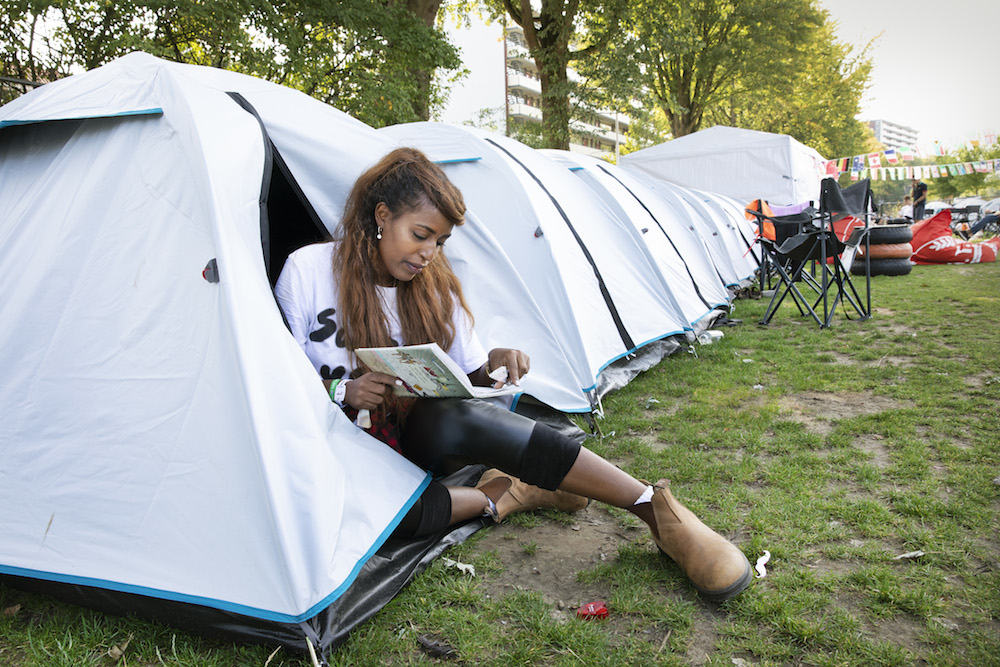
Some academic staff were even taking them in due to shortage of places to rent.
I managed to rent a very nice place in Bedum, a village 13 km from the university campus, and I was commuting every day on bike.
The only way to make housing affordable is to end property investing.
The issue of housing affordability comes up a lot on HN and the discussion often turns to a shortage of supply.
Often overlooked is the demand side of the supply and demand equation. From my perspective (mostly familiar with the NZ/AU markets), this is where the real problem lies.
Statistics New Zealand have collected data on the total number of private residences and the total number of households since the mid-90s. The difference between the two has almost doubled to around 7.5% nationally. There are substantially more empty or under-utilised residences in a time where every politician is telling us that building more houses will fix the problem. It won't. At best it will alleviate the problem.
Prosper Australia's Speculative Vacancies Report [0] (looking at water usage to determine under-utilised properties) suggests areas with high vacancy rates in Melbourne correlate with areas where capital gains (i.e. percentage price increases) are greatest. This is the opposite of what you would intuitively expect in a naive supply and demand equation - desirable areas have higher vacancy rates, even approaching 20% by their reckoning.
A study in the UK [1] using council data found that high property prices correlate strongly with what the study refers to as 'low use properties' (LUPs).
I wouldn't be at all surprised if the situation is the same in the Netherlands.
All of this suggests that demand for investment, not demand for housing is driving prices up. Zoning restrictions and other regulations do play a part, but I think in many cases their influence on the larger picture is overstated. Cheap loans, leverage, and favourable taxes make property a good investment.
The only solution is to make property investment less attractive. A land value tax - though politically difficult - seems to me to be a good option.
[0] https://www.prosper.org.au/wp-content/uploads/2019/04/Specul... [1] https://theodi.org/event/friday-lunchtime-lecture-empty-home...
Often overlooked is the demand side of the supply and demand equation. From my perspective (mostly familiar with the NZ/AU markets), this is where the real problem lies.
Statistics New Zealand have collected data on the total number of private residences and the total number of households since the mid-90s. The difference between the two has almost doubled to around 7.5% nationally. There are substantially more empty or under-utilised residences in a time where every politician is telling us that building more houses will fix the problem. It won't. At best it will alleviate the problem.
Prosper Australia's Speculative Vacancies Report [0] (looking at water usage to determine under-utilised properties) suggests areas with high vacancy rates in Melbourne correlate with areas where capital gains (i.e. percentage price increases) are greatest. This is the opposite of what you would intuitively expect in a naive supply and demand equation - desirable areas have higher vacancy rates, even approaching 20% by their reckoning.
A study in the UK [1] using council data found that high property prices correlate strongly with what the study refers to as 'low use properties' (LUPs).
I wouldn't be at all surprised if the situation is the same in the Netherlands.
All of this suggests that demand for investment, not demand for housing is driving prices up. Zoning restrictions and other regulations do play a part, but I think in many cases their influence on the larger picture is overstated. Cheap loans, leverage, and favourable taxes make property a good investment.
The only solution is to make property investment less attractive. A land value tax - though politically difficult - seems to me to be a good option.
[0] https://www.prosper.org.au/wp-content/uploads/2019/04/Specul... [1] https://theodi.org/event/friday-lunchtime-lecture-empty-home...
I’m reminded of behavioral studies showing that other primates have an instinctive concept of “fair” and will choose against cooperation if a deal seems unfair to them. I think this was covered in Freakonomics.
How about making a civil law where anybody can sue the owner of a home if it’s not occupied in a way that benefits the community around the home - say with a $10,000 plus court fees and 10% of any residual income minimum for anyone in the community who sues and wins?
How about making a civil law where anybody can sue the owner of a home if it’s not occupied in a way that benefits the community around the home - say with a $10,000 plus court fees and 10% of any residual income minimum for anyone in the community who sues and wins?
Perhaps relevant to this discussion. Another article on the same website from 7 days ago.
https://nltimes.nl/2021/08/29/us-investor-blackstone-accused...
Cant help but think, may be this is some form of insider trading by the wealthy - buy up apartments before such a regulation comes into place?
https://nltimes.nl/2021/08/29/us-investor-blackstone-accused...
Cant help but think, may be this is some form of insider trading by the wealthy - buy up apartments before such a regulation comes into place?
I think I mostly agree with this idea, but while removing pure investors from the market may offer some (or significant) help, however it still does not solve the mismatch between supply and demand. I think the removal of investors will lower the demand, but I think the mismatch will still exist in many places. And proposing solutions for that is essential, i.e. either building more or making it easier to work remotely etc.
What exactly does it mean that investors are driving up prices? As far as I know an investor gets two things by owning a house: a stream of future rent payments, and an appreciating asset. We can easily calculate the present value of the future rent payments. It would be a weird and obviously temporary condition if homes were selling for less than this. A market in disequilibrium. Is that the theory here? The healthier housing market we had in the past was homes priced at less than the NPV of their rents?
Maybe the investors are simply irrational and are overpaying for these properties? Hoping for greater fools? This seems like great news. Everyone who owns a property should sell it to one of these exuberant investors, enjoy the hefty profit, and rent (perhaps from the same person, without even moving house) while waiting for the crash. If this is our contention then rents are reasonable and people who simply want to be housed should just pay them.
Or maybe the market has always been in equilibrium and the investors have always been rational, but now the NPV is rising. It could do this for two reasons: the rents going up, or the discount rates going down. It seems plausible that both of those things are happening. The unstoppable force of urbanization meets the immovable object of NIMBYism; urban rents rise. Low interest rates reduce the discount rate. Although stock market returns have been incredible, so I'm less sure about this part. In any case, maybe what we're looking at is new, higher NPVs and we're hoping to keep the housing market in disequilibrium to prevent prices from catching up to that NPV?
I guess the final paragraph seems the most likely. And, well, good luck. When there's a systematically under-priced asset, people are going to find a way, rules or not. It would seem a lot more effective and sustainable to address the drivers of the rising fundamental value.
Maybe the investors are simply irrational and are overpaying for these properties? Hoping for greater fools? This seems like great news. Everyone who owns a property should sell it to one of these exuberant investors, enjoy the hefty profit, and rent (perhaps from the same person, without even moving house) while waiting for the crash. If this is our contention then rents are reasonable and people who simply want to be housed should just pay them.
Or maybe the market has always been in equilibrium and the investors have always been rational, but now the NPV is rising. It could do this for two reasons: the rents going up, or the discount rates going down. It seems plausible that both of those things are happening. The unstoppable force of urbanization meets the immovable object of NIMBYism; urban rents rise. Low interest rates reduce the discount rate. Although stock market returns have been incredible, so I'm less sure about this part. In any case, maybe what we're looking at is new, higher NPVs and we're hoping to keep the housing market in disequilibrium to prevent prices from catching up to that NPV?
I guess the final paragraph seems the most likely. And, well, good luck. When there's a systematically under-priced asset, people are going to find a way, rules or not. It would seem a lot more effective and sustainable to address the drivers of the rising fundamental value.
Dutch cities are easily the best-planned cities in the world. The channel "Not Just Bikes" [1] goes fairly in-depth as to why. I think I'll trust that the Dutch city planners know what they're doing in this instance.
[1]: https://youtube.com/c/NotJustBikes
[1]: https://youtube.com/c/NotJustBikes
There is also a law in the works called "Prince Bernhards tax", our Prince owns a lot of expensive property in Amsterdam.
I have thought about San Francisco. It really does feel like this whole city is empty. No stores stay in business, no one seems to be walking around these neighborhoods. I have considered if you can fly around with a plane at night and use something like heat vision to determine who is home?Because I think the stats are just not correct for SF
I've been looking at buying a bigger home than the current one I own. It's near impossible as prices keep on going up. Very disapppinted that cities have to arrange this - it means that some cities won't yet introduce anything.
I can already see investors swooping into those markets without the ban... i.e. Haarlem where I live will be among them.
I can already see investors swooping into those markets without the ban... i.e. Haarlem where I live will be among them.
Good. I went to Prague recently (after 10 years) to discover that the entire city centre with all of it's businesses is now owned by chinese people. A 500ml water costs 10 euros and everything seems different, designed to just milk the cash from tourists. Had a much better experience 10+ years ago and made quite a few local friends.
1) Visiting London and spending time in South Kensington - walking back to hotel at night, only about 30% of houses had any lights on. Suggestion is the others are effectively uninhabited, and a search on RightMove shows properties sell for £20-£30m for a 4/5 bed. This isn't normal Londoners, it's outside investment.
2) Cornwall, where I live - an insane house price rise over lockdown as city dwellers aim for the beautiful bits of the country. Literally no way now you could afford your first home round here on minimum wage, and some towns have a high (>50) % holiday or second homes.
It's an untenable situation. I think my generation (I'm nearly 50) are probably the last to be able to afford their own home on anything other than a massive wage.
Round here in Cornwall the jobs are things like surf instructor, supermarket worker, barperson, etc. That's not gonna stretch to the local house prices.