Rust handles this by automatically unlocking when the MutexGuard returned by lock() is dropped. The issue here is not that the mutex remains locked, but rather that the data protected by the mutex might be inconsistent (and the mutex unlocked) after a panic.
One interesting thing about the dwarf format is that it is executable and Turing complete, running small programs on a virtual machine to figure out file names, line numbers and exception handling.
A local group of security people have been running a weekend project they call Project Lion Cage where they take Chinese cars into a local mine with spectrum analyzers etc. to watch where they send data and so on. This is how the bus was evaluated as well. Tor Indstøy has quite a few posts on his LinkedIn page talking about the work and what they have found.
The term of art you are probably looking for here is grid forming inverter. The ENTSO-E class list on Wikipedia is probably a good starting point for some of the problems that one might want to handle:
And to add to that, power is almost always the number that is reported/counted so watts is usually correct. That might seem strange since batteries store energy, but in terms of the service they provide to the grid power in/out is more important than storage at least for now.
BloombergNEF reports a cost of $115 per kWh for turnkey energy storage systems (in China) so their comparison is likely to hold up for complete systems in Australia and the US.
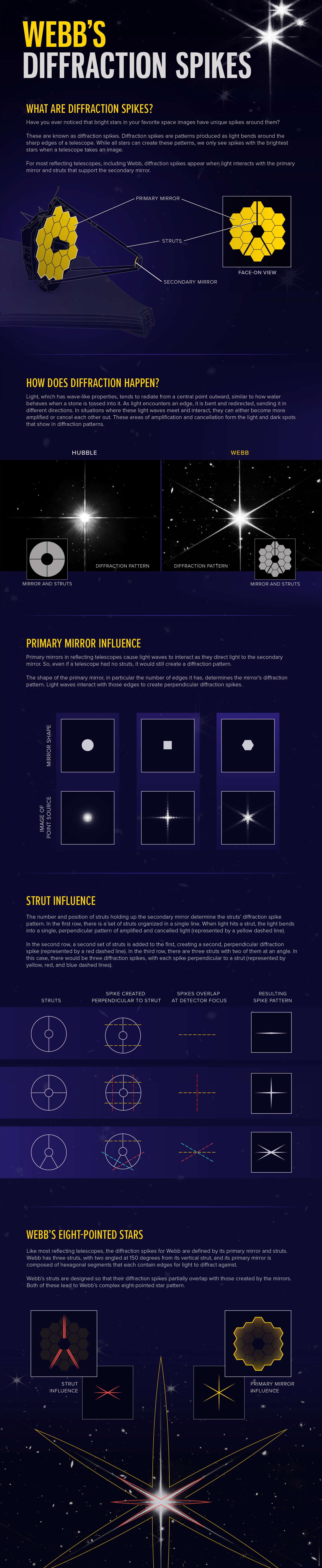
The 6+2 spikes around the bright stars is a diffraction pattern created by the edges of the hexagonal mirror segments (the six large spikes) and the three struts that hold the secondary mirror (also six spikes, but four overlap with the mirror spikes).
The requirement is for the government to produce an impact statement (including carbon emissions in foreign countries and emissions from e.g. combustion) as part of the plan for development and operations that is presented to parliament for approval. This follows from the Supreme Court decision in 2020.
There is also a temporary injunction on further developments and decisions related to these three oil fields until the validity of the plan has been decided.
The District Court ruling was appealed by the government yesterday.
> Does this also share back DHT information like a "server"?
No, it ignores all incoming requests. You don't need special software to help out, just run any normal Bittorrent client in the background (no need to download or share anything) and it will help out. Just make sure you forward the right port if you are behind a NAT. Traffic will slowly increase over time, and drop quickly when offline, so leaving it up for days at a time is better when possible.
> Car commuters miss commuting the least: 55% of this group do not miss it at all. Commuters by (e-)bicycle are the group who miss commuting the most, with 91% missing at least some aspects of commuting. As might be expected, the feeling of missing commuting also decreases with increasing commute duration (Fig. 5).
> The connection between work and commuting is evident in the relationship between missing commuting and the intention to work from home in the future (Fig. 7). Among those who do not miss the commute at all, 72% express desire to work more from home in the future. Among those who miss commuting a lot, 69% would like to go back to their previous work routine.
This matches the numbers that have been reported in Norway as well, where the percentage that miss their commute are roughly 80% for pedestrians/cyclists, 50% for public transport and 30% for driving (https://www.nrk.no/norge/blir-palagt-hjemmekontor-_-mange-sa... in Norwegian)
I think BitTorrent has all the pieces needed for a fully distributed version of your idea. My initial thought is that you could publish a magnet link that points to a mutable DHT item, which in turn points to a torrent that has a JSON file with some metadata and a list of infohashes the publisher cares about. The client could then scrape the "leaf" torrents from multiple lists to get the peer counts and use that for local prioritization of what to store. By reusing existing torrents you could then share resources with standard torrent clients that are unaware of your system.
The list idea could be extended to nested lists (stavros recommends Internet Archive) for discoverability and composition.
If you go with v2 or hybrid torrents from the beginning you could deduplicate and cross seed files from different collections.
The lists could also be modified to have torrents to exclude, possibly using some salt + rehash idea to make it hard to reverse into a list of e.g. CSAM you don't want to publish as is.
Feels like a neat project that could interoperate nicely with existing torrents.
edit: other angles of the same location here: https://youtu.be/DIQ4SrGSua0?t=1174