I just grabbed a random program listing for urologists at NYU Langone [1]:
> Residents spend the first (intern) year of the training program completing both general surgery and urology rotations, and years two through five in urology. During year three, residents also conduct clinical research with a faculty mentor in a subspecialty of their choice.
My potentially unpopular opinion: Congress should ban residency programs from using Medicare training dollars to pay for research. They should do this with the goal of speeding up the training pipeline for actual practitioners, many of whom are now required to spend a year of their residency doing research of some kind.
If medical residents, or teaching hospitals, want people to do research, they should go get funding from established research funding sources that have standards and practices for funding and monitoring research.
This is interesting, but I feel like my use cases would better align with a different irrational number. Could I get an option to do this with e instead? /s
I know it's unconventional, but I thoroughly enjoyed reading that translation. It felt so alive, and other translations have never engaged me in quite the same way.
I actually did this prompt and found that it worked with a single nudge on a followup prompt. My first shot got me a wine glass that was almost full but not quite. I told it I wanted it full to the top - another drop would overflow. The second shot was perfectly full.
Vail averages something like 240" of snow per year, which is 20 feet. Wolf Creek usually gets the most snow in Colorado and averages 430" of snow per year, which is almost 36 feet.
Judging from the comments I've seen, nobody believes this because RFK has completely shot his credibility, and I don't blame them either.
But it turns out there may actually be some emerging evidence to support this. This recent Harvard meta-analysis [1] from just last month looked at 46 different studies and suggested that there may actually be something happening here although it's not conclusive. Correlation but not yet causation.
Nobody should be making policy on this yet, but it's the kind of thing that I would allocate some research dollars to if I hadn't just fired all of the competent researchers.
I have a Garmin Descent Mk2i which I use for scuba diving, and it's a fabulous all-purpose fitness and adventure watch. I've used to for hundreds of dives, navigation on multiple backpacking trips, cycling, and tons of other stuff. I even wear it daily, and it nicely supports notifications from my phone.
When Garmin originally launched a scuba watch, I was kind of surprised. It's a small market, and there were a lot of established "good enough" players in the space. Everyone already had a dive computer. Who would want an expensive one from Garmin when they could buy an expensive one from Shearwater? But Garmin showed up with a good product, iterated by adding their sonar based SubWave for air integration, and eventually took a lot of marketshare by including fitness and smartwatch features the competitors lacked. Now I see tons of Garmins on dive boats. People love them.
I'm just past the second dose on my older border collie, and it has been a good thing for him. But I would hesitate to call it a miracle. He's somewhat more active and flexible, but he still has some trouble climbing steps and stairs.
He also loves the cold, and he's always more active in the winter anyway. I would say he's close to the level he was last winter instead of slightly declined. That's great, but not miraculous.
We'll stick with the regimen and see if he continues to improve. I'll upgrade my judgement if he starts climbing stairs again.
> But this fallacy has been repeatedly exposed. For one, the organisations that are supposed to certify that indeed enough tree-planting has taken place do not have the tools to verify that the declared emissions will definitely be absorbed. Another problem is that many offsetting activities do not actually offset anything.
> A recent investigation into the world’s largest carbon standard found that 94 percent of its rainforest offset credits did not actually contribute to carbon reduction.
When I looked at the offset market in the past, I realized that it was one of the few markets where both the buyer and seller are perfectly happy with fraud.
- The buyer is motivated to seek the lowest cost offsets they can find. They're not paying for the cleanup - all they need is the offset document itself, often for legal purposes.
- The seller is more than happy to take the buyer's money and spend it on looking like they're doing something. The rest is free margin.
Neither side remotely cares about the underlying activity behind the offset, and neither side is really penalized if the underlying activity is fraudulent. In fact, both sides are actually better off if the whole thing is fraudulent! I can't think of many other markets where this dynamic exists.
Many countries permitted leaded gasoline for a long time, and many of the countries that kept it around the longest are also places that grow a lot of chocolate. Lead from car exhaust tends to stick around in the environment for a long time - as part of the soil and the dust in the air.
In South America [1]:
> The first country in South America initiating the phase-out of leaded gasoline was Brazil, moving toward alcohol fuels and unleaded gasoline from AD 1975 on, and achieving a total phase-out in 1991. On the contrary, unleaded gasoline in Bolivia, Chile, and Peru was not introduced before AD 1990–1991, and leaded gasoline was still in use until 1995 (Bolivia), 2004 (Peru), and 2005 (Chile).
In Africa [2]:
> But lead was still common in fuel in Africa and the Middle East. In 2002, UNEP organized a coalition of African governments and oil companies to promote the phaseout of leaded gas, the supposed vehicular benefits of which have been found to apply only to very old cars driven in extreme conditions. Lead was history in sub-Saharan Africa by 2006, and by 2014 was found only in Algeria, Iraq, Yemen, Myanmar, North Korea, and Afghanistan.
> Even if I put full fucking detail with brand and model I keep getting pages and pages of random products with different "sponsored" brands, model, features and so on. Its clearly need of Amazon are taking priority over mine.
When inside of a real brick and mortar store, have you walked by one of those displays on the ends of a row that's selling Pepsi products or Doritos? How do you think those things got there? They're called end caps, and stores make a lot of money from brands to put them there because customers are more likely to see them and purchase whatever.
Also, have you noticed that the shelves at stores usually contain the most well known brands at eye level while the cheap stuff or weird stuff is usually down low or up high? That may be store optimization, but more commonly those top brands pay for that eye-level placement.
Amazon didn't invent this. They just came up with the digital equivalent of what stores have been doing for decades.
Diver here. I'm looking at these four pictures after the fact, so I already know they're fake. They're good, but they also have some weird flaws. That said, I don't think I would have immediately recognized any of these as wrong on Facebook (maybe the diver photo).
- The nudibranch (slug thing) on the green coral doesn't look like anything I've seen in the Caribbean before, and the coral also looks odd for the region. That said, this is probably the most difficult photo for me to differentiate. I would have accepted this as a cool find of something I haven't seen before.
- The grouper (big fish) photo is actually pretty good, although DALL-E has misplaced its eyes a bit. That said, the lit foreground and dark noisy background are exactly the look I would expect for someone using a basic camera + lights with wonky post-processing.
- The diver photo is a horror show. There's a hose going nowhere on her back. It looks like she's blowing out of a harmonica instead of a regulator. Bubbles are collecting around the top of her mask for some reason. Her fins look like they were badly Photoshopped. Nothing looks right here.
- The lobster photo has a real but subtle flaw: Caribbean lobsters don't have big claws. It also looks like it's under a rock like you would find in cold waters around Massachusetts and Maine instead of the Caribbean.
Interesting stuff though. It will force me to be more skeptical when I look at people's photos in the future.
Just wait until you meet billing's angry roommate: invoicing.
In the US, an invoice is just a weird PDF that you might glance at before sending off to your accounts payable team. But in other countries, especially those that use VAT style taxing systems, an invoice can be a legal document that expresses costs and taxes in a legally prescribed way for accounting purposes. Many countries have prescriptive rules over how you invoice, who can write invoices, when you can invoice, what goes on an invoice, etc. And every country does it differently.
Are you building a service that charges incrementally many times per period? Or even worse, refunds incrementally? You might be sending a truckload of expensive accounting papers to your customer every month, one per transaction. And each of those pages was printed using government prescribed software from oddball vendors you must use or else.
My late grandmother loved Sees candies, and I frequently gave her a box for Christmas every year. Personally I always thought they were expensive and not as good as some of the artisanal chocolate you can find these days; like a product for older generations with older tastes.
And then I discovered their lollipops and little pops - both chocolate and butterscotch. They're uniquely good as hard candies, and I've never had anything quite like them anywhere else. Now I'm also a Sees candy customer.
Many are! The Florida Keys National Marine Sanctuary is divided into zones [1], with each zone limited to different types of activities like diving / snorkeling, fishing, and research.
There are many good dive operators in the Keys who take recreational divers out to the approved reefs. If you want to get up close to the reef restoration part, the Coral Restoration Foundation also has a dive program to take divers out to their coral nurseries [2].
I've had the good fortune to dive on Pickles Reef, as well as many other reefs on the Keys, so I've been able to see these coral restoration efforts first hand. I would always feel so happy whenever I came across these new groves of staghorn coral. They were small, but often healthy looking, and I just loved seeing them.
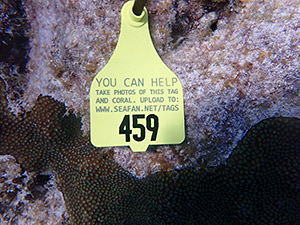
That said, the scale of coral death far surpasses the scale for growth. For example, a government group [1] has placed tags on natural coral groves (i.e. mostly not planted) inviting divers to take and share photos to help track the coral health over time [2]. Many of these tags were next to healthy looking sections of reef, but many others were next to dead lumps. I recall several sections around Looe Key in particular that were just graveyards of yellow tags.
These types of restoration efforts are working, and in some places they're working well. But it's a drop in the bucket and the coral is dying not thriving. More is needed.
> Residents spend the first (intern) year of the training program completing both general surgery and urology rotations, and years two through five in urology. During year three, residents also conduct clinical research with a faculty mentor in a subspecialty of their choice.
Emphasis added by me.
1 - https://med.nyu.edu/departments-institutes/urology/education...