I think that is being too charitable. The problem is 100% reproducible. The machine blue-screens at boot up. What kind of staging environment allows this to go through?
I wonder if a Sun, Dec, or HP of the 90s would have had a fighting chance against Windows NT had they not embraced X, and instead developed a local-first stack optimized for their considerable hardware.
Related, I've always found it odd that in Linus' history of Linux, part of it was a desire to implement an Amiga-like OS on a PC. This is the message-passing-bad guy. What happened?
The PC (1981) predates the first color 3270 terminals like the IBM 3179 (1984). A 3179 had 7 colors: pink, red, blue, yellow, green, white, and turquoise. I used one & remember it looking quite good but different from PCs of its day.
The env I helped set up was online only, no batch jobs. JCL is essentially a declarative shell language, so it's not that hard to map to Bourne shell et. al.
Migrating a suite of programs written w/ COBOL, CICS, DB2 from z/OS to Linux is fairly straightforward. MicroFocus COBOL compiles IBM COBOL, DB2 runs on Linux or you can swap out another RDBMS. The CICS part requires a simple runtime easily implemented in C plus a new scanner to replace the calls in your programs.
I was part of a 4 person team that knocked this out in under a year. 1,000's of mainframe programs running w/o change (at the time) on Unix. This was in the 90s.
I find the bifurcation between HTML elements and CSS statements maddening. Structural things like flexbox and grid would be far clearer as HTML element types.
I use this method as well. To add some specifics, I use a 4 qt saucepan to produce enough for two people. I use enough oil to liberally cover the bottom (glug glug). This is not diet food, excess oil tends to remain in the pot anyway, and I believe most of the heat transfer is oil to corn as opposed to from the pot itself, so you need ample hot oil for a good batch.
To judge when the oil is hot enough for the corn, I add 3 kernels to the initial pot + oil. Once those 3 kernels pop, add enough corn to cover the base of the pan, swirl the hot oil w/ the new kernels, replace cover, but leave slightly ajar to allow steam to escape, and then yeah, a couple more swirls & you should have a perfect batch in about a minute or so.
That's essentially how DNA sequencing works. The longest human chromosome (chr1) has about 250M bases. The DNA samples are sonicated to split them into small sequences, and then sequenced en mass 100-300bps at a time. The results are then reassembled into contigs.
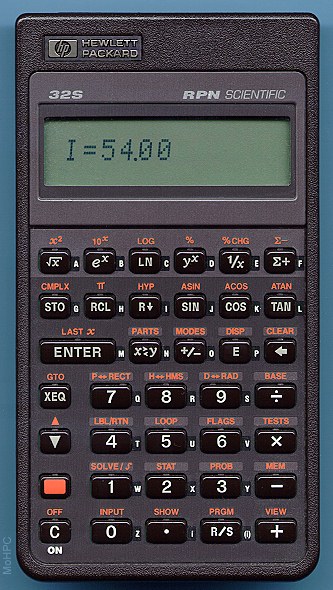
I'm happy one can buy a mighty 4-stack RPN calculator today new. Greedily, I wish they had recreated the 32S instead, as it had a single Gold function key and far less busy silk screening. I say this as a former owner of a 32SII.
The BSD man pages cover it pretty well. It's more fun & games w/ the pseudoterm. Should ^S, ^Q go to the terminal driver, or to the program using it? In the case of the shell, this means the readline lib.
The "other editors" link[1] is welcome. I've never liked the implicit Emacs requirement associated w/ Lisp envs. The list includes Vim, NeoVim, & even IntelliJ!? Good stuff.