Use couchsurfing, and search for hosts that 'want to meet up', and were online in the past week. There are tons of people interesting in showing travelers their city, so send them messages. Or, check the couchsurfing forums and meetups. It's usually just a bunch of locals and travelers grabbing drinks. Popular cities have hundreds of people attending and daily events, while less popular cities might have 5 or 10 people getting together for drinks once a week. There are always new people at every meetup, so you'll fit right in showing up at the pub alone and joining the group.
Or, if you're staying somewhere for a few months, then offer couchsurfers a couch to sleep on. People are always passing through, so you give an interesting person your couch for a couple of nights, and discover the city with them.
It's made my travels a lot more fun, and I now pick places to live that are popular on couchsurfing because it's that much easier to meet people.
I just stumbled on this link, and apparently you can stop contributing to specific sites, and also select whether to contributor to all participating sites, or ones you specifically select.
It looks overpriced. I need to be signed into my Google account at all times when browsing the internet, pay $10-15/mo, and even then, it's only removing something like 50-75% of advertisements. It's more expensive than ad block, it removes less ads than ad block, and it leaves a big empty space that ad block can typically remove.
This sounds like a poor experience for the end user, and I can't see it catching on.
This page has been online for a while, and it still appears to be limited to a very small, select number of publishers. Did anyone request an invitation and actually receive an invite during the last 5 months?
I'm assuming this is another Google service that'll die before I'm able to try it.
Upgrading their service is expensive. T-Mobile upgrades, then Sprint has to upgrade to compete, then T-Mobile has to upgrade again, then Sprint...
Instead what's going to happen, T-Mobile and Sprint both agree to offer the same performance, or focus on different regions.
It's like selling slices of pizza on the street. If you're smart, you and your competitor agree to sell at $5/slice. If you drop to $4, sure you'll get more customers for a short period of time, but then your competitor drops to $4, and now you both just cut 20% off your revenue for no reason.
It looks small in the video, but that first stage is the height of a 20 story building. It can't tip over without destroying itself, and it's not something you want to get wet.
Kai Greenes is saying to use a lower weight so you can manage proper form. Sacrificing form just to hit a number goal, or to impress the person beside you at the gym is only going to lower your gains.
That has nothing to do with volume training, that's just proper weightlifting in general.
Try saying that on the radio, or at a meeting, or during a presentation, or when networking with someone.
It's a mess, you're having a drink and meet someone in your industry. Oh, visit my site, it's john.ninja, or http://john.ninja. They'll give you the 'huh?' look, and you need to explain that it ends in .ninja instead of .com.
You'll always need to write a longer address and can't say john.ninja. You'll always need to explain in a little more detail how to visit the website. If your site ever becomes a huge success, lots of people will be visiting john.com, so hopefully they don't run a similar business or anything inappropriate one day.
Imagine if you were Netflix, and you ran the business using the domain Netflix.video. You would be going insane right now, and be willing to spend a small fortune trying to get a hold of Netflix.com. If you bought the domain for 20 million, people would agree it was a good move and investment. That's just how important having the .com domain is to a business.
I believe it's still .com, then everything else, even if people typically find sites through search.
Why? If I write on a poster john.com, or on a cereal box, or on my business card, or I say 'visit us at john.com' on the radio, or my tv commercial says john.com at the end, people know exactly what to do. They recognize the words john.com as a website they can visit or search.
Now, if I say, 'visit us at john.ninja' on the radio, people have no idea what I'm even referring towards. If it's on my business card, people are wondering if my last name is ninja, or maybe this is just a fun play on words, and I refer to myself as john.ninja and the dot in-between the words is for design purposes. To fix that, you need to write more, www.john.ninja. However, it's still difficult for people to digest. Most people would probably ask, 'that's a website?', and then they would just visit google and type in 'john ninja', which may or may not get them to my site.
I didn't know how to write a line of PHP or MySQL (previously a frontend designer/developer). I went through a couple of the courses on Lynda because I had an idea for a project I wanted to develop. I started writing backend code for the project within a week of starting the Lynda tutorials to practice what I was learning. The project started gaining traction and users a couple of weeks after that, and I quit my job a year later. Today, it generates about 70k a year in passive income.
Lynda brought me from not knowing how to declare a variable, to being able to develop a simple site with a database, user registration, commenting, administrative pages, etc, in a very short period of time. It's a great resource to hit the ground running in a week. However, like you said, you then need to to grow using other resources to learn how to sprint.
You want to develop a body cam for law enforcement? I don't think current systems or costs are holding them back at the moment. Instead, most law enforcement agencies simply don't want them. Even if they were mandatory, they would likely be disabled, or accidentally broken or obscured during key events.
If you want to see officers wearing body cams one day, you're better off getting involved in politics.
It's easy to paste in a block of code to insert ads. Accepting payments, tracking them on user accounts, and hiding those ads is obviously a little more complicated.
If Google Contribute (https://www.google.com/contributor/welcome/) doesn't pull a Google and remain invite only until death, it'll simplify the process and we might see this become a more common approach.
I really don't like the idea of every site attempting to roll out their own solution. It would be nice to have a system to manage subscriptions across a variety of websites. I log-in, and I can see all the sites I'm subscribed to at the moment. I can then toggle individual sites on or off with the push of a button, or I can change payment plans for individual sites (if I switch to the HN $2/mo plan, my username appears in blue). Sites could then query the payment info using some kind of API and user tokens, to see what user is currently subscribed to what plan.
I think my favorite is the bug where you could delete any folder from a user's computer, just by linking them to a site with a few lines of code inserted in the source. I think it was on XP, and it would trigger Windows help to open at the same time.
No need to track 50,000 aircraft. Instead, have the stream automatically switch on when the plane is in distress, when it's losing altitude, when an emergency has been triggered, or when it's going off the flight path.
Is it free housekeeping, or cheaper cleaning? You're claiming both, so what's the business plan and how much are people saving?
Secondly, people always take free samples, so what's the benefit of cleaning their home? Why can't you walk down the street and hand out advertisements and free toothpaste or lotion samples? You can easily give out hundreds in an afternoon, and it doesn't cost a thing. So, why clean a house for free, or give them $10 or $20 off the cleaning, just to drop off a couple of samples in one household?
It's faster and cheaper to write clickbait articles, and they have a wider appeal. People are much more likely to click and share something with the name, 'What Disney character are you?' or 'Top 10 reasons you should start going out on Tuesday nights', compared to anything on Gigaom. It takes a lot of time to write proper articles, to check the facts, to follow up with sources, and to maintain a respectable reputation.
I'm sure they could trim the fat, and maintain a small group of dedicated writers, pay the bills and make a living. However, they raised quite a bit of money, so they kind of need to go big or die at this point, and going big is not easy for the reasons I mentioned above.
I've seen my site copied countless times. There are at least 5 or 6 clones that are blatant knockoffs. There are people that bought the non .com domains of my site, and copied the images I designed, and sections of my html code. There are well known companies that have literally copied some of my content word for word and passed it off as their own. One of the clones is similar to your situation, they created their clone for a different country and language, and have a few hundred thousand users.
I stopped caring. I'm by far the leader in the space, and I spend my time ensuring I provide a superior service to the clones. It's actually turned out in the benefit of everyone. It provided motivation, and I worked twice as hard to stay ahead of the pack, so now my site is extremely polished. My users are happy, because they've seen the service continue to improve.
So, my advice is not to worry about it, and to focus on providing the best experience for users, so your competitors have no room. However, keep an eye on the competition, and make sure they're not beating you in any area, that might persuade users to switch services.
I have a Samsung Series 9, which was renamed to the Ativ Book 9 in recent years, so they may have improved on some of the below issues.
1. Some of the media keys don't work on Windows 8, even with Samsung software (laptop shipped with Windows 7, and they offered limited support with Windows 8).
2. The touchpad is awful. I can click on some right sides of the touchpad and it left clicks, or sometimes it right clicks when I click on the left side. My old netbook and dell laptops had much better touchpads. Thankfully, the touchpad is rarely used.
3. Usb or mini hdmi devices sometimes disconnect if I wiggle or bump the plug.
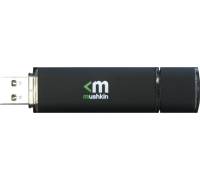
4. Ports are too close together. I have 3 or 4 flash drives (some fairly slim - http://www.testberichte.de/imgs/p_imgs/Mushkin+Ventura+Pro+%...), and none of them fit in the left port, because they hit the power cable. In the right port, they're also tight if I have headphones plugged in. You really need to be careful with the cables and devices you own, because you only have a millimeter or two of clearance between them.
5. The power cable on the side is annoying. When I move the laptop when it's plugged in, the cable always wants to fold under the device. I guess it's better than my dell, where the cable would pull out the back at the slightest movement.
6. Battery life is poor. I keep the battery saver enabled, which only charges the device to 80%. It goes from 80% to dead in about 1 to 1.5 hours, with just general browsing on the internet.
On the plus side, the screen is perfect, it's extremely lightweight, very quiet, it's now my favorite keyboard, and it's fast enough for everyday work. So, it has flaws, but it's the best laptop I've owned to date, and I'd either buy the newer model or one of apple's offerings the next time around.
Simple answer. Download the apps from your top competitors and start using them. When you get bored of them and quit in an hour, or a week, you'll know why they're dead.
I'm hoping it brings some fun, education uses. For example, VR cooking with Gordon Ramsey, where you're in a virtual kitchen, cooking along with a professional chef. Or VR public speaking. Most people are scared of speaking in public, so you can practice in front of a VR crowd. You could have DLC for classroom speaking, weddings, boardrooms, etc. I figure you could setup a 3D 360 camera in front of a group of volunteers, and then just use that video for the VR experience. It would also be great for training. Ever run a backhoe? A typical setup is two sticks for moving the bucket, so you could make an easy simulator with the Valve VR controllers to give people practice in a variety of situations. Or driving simulators for new drivers, where they can practice their parking.
You need real world training for all of the above, but I'd be curious to see how the VR training could help people get started. I wouldn't buy a VR headset for any of these things alone, but combine it with games, entertainment, virtual workspaces (you could be sitting in a 10x10 basement, but feel like you're sitting at a desk in a penthouse overlooking New York), and I think they could be quite versatile, and a worthwhile purchase.
I can imagine big business in creating alternate reality assets, such as virtual homes. I wonder if you could combine the real world and the virtual world as well. For example, I'm building a new home, so I make a 20x20 room, dividing a 5x20 and 15x20 section with a sliding door. I put a bed in the 15x20 area, and a railing in the 5x20 section. There's nothing passed the railing, it's just a railing 2ft from a blank wall. However, I create a virtual world that matches the geometry. I put on the headset, and I can sit down on my virtual bed, or walk across the room and slide the door to the balcony. With the headset, the balcony looks like it's on the 20th floor, overlooking the ocean. I can lean on the railing and look down at the world below, while in the real world, I'm just wearing a headset staring at the wall in front of me. I could put a fan in the 5x20 room, so in VR, it feels like there's a breeze on the balcony.
It sounds a little crazy, but is it? You can turn an unfinished space, such as a basement, into a billion dollar VR dream home. There could be a VR home generator, where you enter the floor plan of your basement, and it generates a VR home with rooms and doors that match that space. I'm curious to see where things go, it'll be an interesting decade.
Or, if you're staying somewhere for a few months, then offer couchsurfers a couch to sleep on. People are always passing through, so you give an interesting person your couch for a couple of nights, and discover the city with them.
It's made my travels a lot more fun, and I now pick places to live that are popular on couchsurfing because it's that much easier to meet people.