Posting this in light of Sergey Brin’s Stanford comments last week about Google under-investing after publishing the Transformer paper. Not just in scaling compute, but in actually turning that invention into first-class LLM products.
I revisited a 2015 radio interview I did (months before OpenAI existed) where I tried to reason about AI as “high-level algebra.” I didn’t have today’s vocabulary, but the underlying intuition—intelligence as inference over math and incentives—ends up looking surprisingly close to how LLMs actually work.
Curious which parts people think aged well vs. clearly wrong.
It's not leaked. It was posted publicly to YouTube, which is where I watched it. It was the first or second video in my recommended feed. I even left a comment, "Thank you, Stanford, for uploading this talk for us." which Stanford put a heart on, pinning it to the top of the YouTube comments: https://i.imgur.com/LSi6mqN.png
It was a good talk on a technical level. My guess is he ran into trouble when he briefly criticized modern Google's corporate culture when it comes to work-from-home?
The main thing is the funny anecdote about Lua that I shared over there. I'll post it here too. We used Lua for all of the visual programming for the music tracks. This was not allowed by the 2008 App Store policies. We decided to just rename all our .lua files as .cfg (.config?) to obfuscate our rule bending. After the app blew up in popularity, Apple eventually reversed course on this rule.
Unfortunately a reality if you care for vintage iPhone games. Piracy is sometimes the last line of defense for game preservation.
In our case, a group of hackers have released a fangame that is in many ways equal to a modern Tap Tap Revenge, and it can be found here: https://taptapreloaded.com/
Loved working on those music games. And that we have a nice document of some of its creation in the video above. I have great memories of working on the series, spread out across Champaign, IL (home of UIUC), the NYU Tisch Center, even a restaurant in Montreal.
Steve Jobs even demoed Tap Tap Revenge at an iPhone keynote in 2009! Our little game!
> At the end of each difficulty tier, you unlock a new song that's accompanied by art specific to the track. Daft Punk's "Technologic," for example, has an old-school TV screen that flashes images and the band's name as notes stream down bars that are much shorter and shaped differently than the main game screen. Moby's "Disco Lies" also uses short bars that unfurl from what looks like the mouth of an alien designed by a nine-year-old using MS Paint. (And that's not a slam to the artist -- I think it's very cool.) Once you finish a boss track, that song become parts of the track list on the next tier.
> Unless you want to stab your ears when you hear techno, Tap Tap Dance is the best music game on the App Store right now. The note placement and control sensitivity is just right, making it instantly playable to anybody. But Tap Tap Dance doesn't hold its fire. By the time you reach the hard tier, you are getting a serious thumb workout. With excellent song selection and super-cool graphics, Tap Tap Dance is a pleasure to recommend.
One interesting fact about the game. We designed all the levels around Lua, which was officially banned from the App Store when we were making it. I remember deciding with the other main developer, that we should rename all our .lua files, .cfg (.configure) to buy us some time.
Ultimately, Apple eventually changed the rules to allow for this.
> Our long-term goal is to produce a highly documented and complete C++ codebase for every version of Twilight Princess. Having clear and readable source code will aid speedrunners, glitch hunters, and modders curious about how particular parts of the game work.
> Our primary goal is a full decompilation of the GameCube USA version with appropriate documentation. After this is achieved, we plan to decompile the other versions of the game.
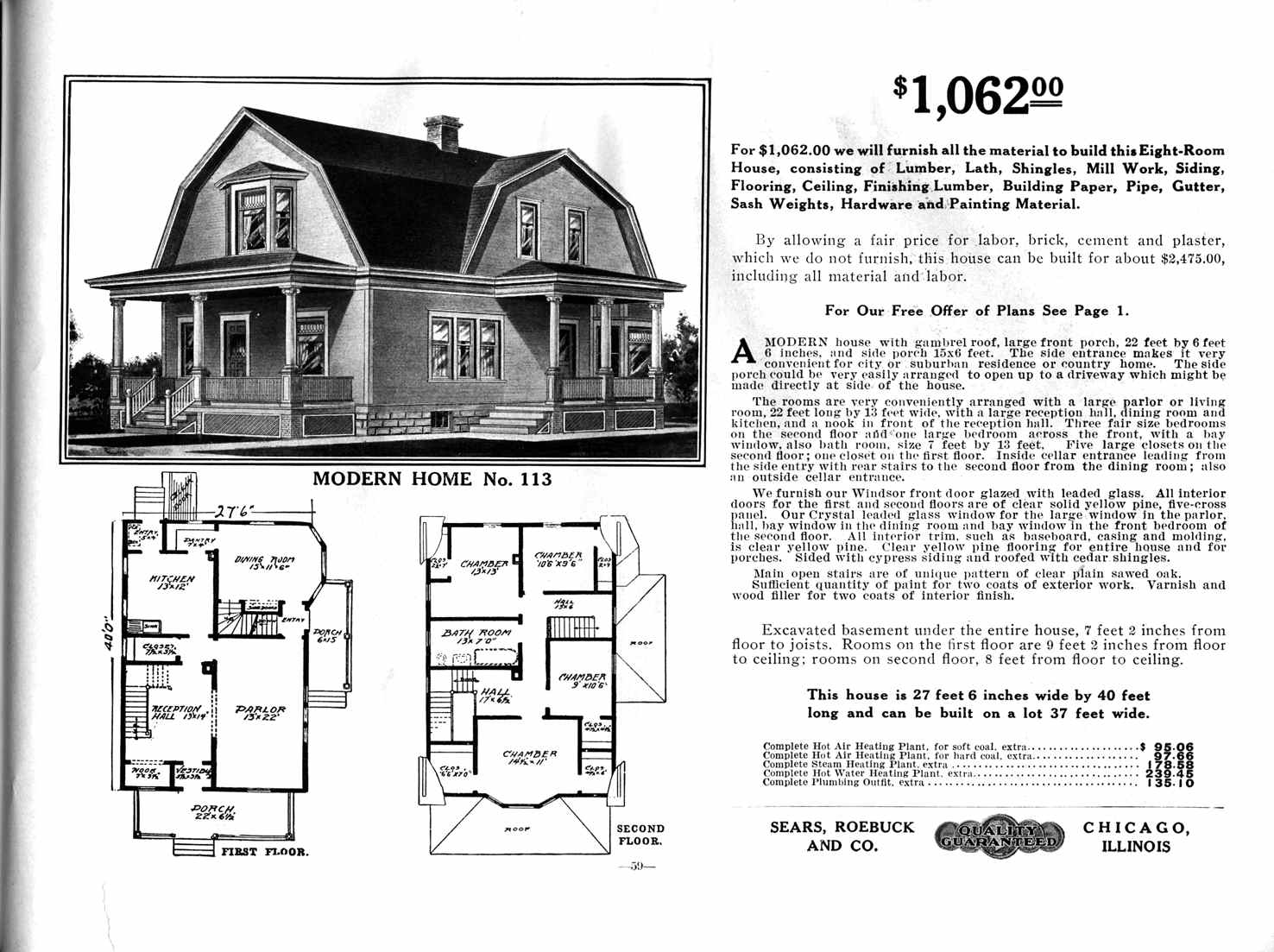
You can click on the pictures to see the original home ads in the Sears catalog, with prices (e.g. http://www.searsarchives.com/homes/images/1908-1914/1911_011...) $1062 for the parts to a beautiful American Craftsman style bungalow ($34,394.38 adjusted for inflation)! Some assembly required :)
On a tangential note: Sears killed the mail order catalog in 1993, just as the Internet was starting to take off. They could have been Amazon. Now, even their landmark highrise, the Sears Tower, has been unceremoniously renamed Willis Tower.
I still like the idea of mail order house parts & plans though. Someone should start a startup to make and build them.
> However, the production and distribution of commodities is entirely unorganized so that everybody must live in fear of being eliminated from the economic cycle, in this way suffering for the want of everything.

I revisited a 2015 radio interview I did (months before OpenAI existed) where I tried to reason about AI as “high-level algebra.” I didn’t have today’s vocabulary, but the underlying intuition—intelligence as inference over math and incentives—ends up looking surprisingly close to how LLMs actually work.
Curious which parts people think aged well vs. clearly wrong.