Users to USTR: Don't Sign Away Our Ability to Fix the Orphan Works Problem(eff.org)
eff.org
Users to USTR: Don't Sign Away Our Ability to Fix the Orphan Works Problem
https://www.eff.org/deeplinks/2015/08/users-ustr-dont-sign-away-our-ability-fix-orphan-works-problem
3 コメント
I wish you had to register to obtain the copyright for you work. It shouldn't be automatic. If you intend to make money from something, surely registration + a small fee every 5 years wouldn't be a huge burden. Fail to do that, and the work becomes public domain within two years.
Under such a system, a photographer would presumably have to register each photograph before hosting the image on her website, or risk losing copyright protection.
This seems extremely onerous for a wide range of creative professions.
This seems extremely onerous for a wide range of creative professions.
Trying out variants of older approaches would probably work, though; a system which grants a short (say, 14 or 28 years, like the old terms were) term of copyright automatically, but requires registration to extend the term beyond that would solve the orphan-works problem, and allow people who really wanted to maintain copyright on their old photographs to just batch-register them at the extension date.
Oh come now. In today's age, this is not onerous. Flickr allows me to assign a Creative Commons license automatically to every photo I upload (with the ability to change it for each photo on the fly in the uploader). An extra API query is not killing anyone. And if you must host your own site, a Wordpress plugin could do this.
Just as its not onerous for Amazon to calculate sales tax across the country with software, this is no different. Software, as usual, makes everything easier.
Just as its not onerous for Amazon to calculate sales tax across the country with software, this is no different. Software, as usual, makes everything easier.
This future photographer will use some specialized computer software that automatically registers every photograph that ends up on their own personal website.
BTW, we're working on the underlying technology for this kind of stuff here:
https://github.com/blockai/openpublish
BTW, we're working on the underlying technology for this kind of stuff here:
https://github.com/blockai/openpublish
Is the idea here that an artist would first register their work on the blockchain, then publish it publicly?
I've had a very similar idea to use something like that registy with a browser extension that catalogs every resource visited by a user (by the SHA-2 of it's content), what site referred / linked them to it. This will create a big list of consumed content. At the end of the year, the user can view their audit log (and metadata on it, e.g. how many minutes of a video they watched, how they rated it etc) and it will let them donate a certain amount of numbers from an atomically incrementing counter signed with keypair identity to the artists registered for those works and those that referrer them to the content.
The donater could back keypair with a variety of identities (maybe something like a twitter account that takes into account how famous the donater is based on their followers etc or maybe through something like keybase that aggreates together several social media identities into a unique key). The donater could also back this counter with a certain amount of money or BTC or whatever (essentially acting as their own bank).
This allows an referrers/artist to be compensated in both fame (the Sum of the amounts of count assign to them * the follower-strength of the person assigning the count at the time of assignment / the total count that person has assigned) which is useful for parlaying into advertisement backing and fortune (the total value of the count they were given). The artist/referrers can hold their count (speculating a rise in the value of that contributors count), can trade some portion to other's via the blockchain or back to the original donater in exchange for the backing amount.
Obviously people can parasitically clone works and republish them, with minor content variations. Hopefully some sort of auditor could set what constitutes a new vs derived work and how the splits are calculated and to find duplication and attribute it back to the correct authors, it would be up to each donater to choose the auditor they want to use when making their donations. The expectation here is that artists would band together and choose to promote the auditors that do the best job of being 'fair'. Ultimately though, the choice on how to give money to the creators of content would be to the public and so auditors that favor regimes unlimited copyright and very restricted derivation would be less weighted than ones that pushed for creative derivative works.
I've had a very similar idea to use something like that registy with a browser extension that catalogs every resource visited by a user (by the SHA-2 of it's content), what site referred / linked them to it. This will create a big list of consumed content. At the end of the year, the user can view their audit log (and metadata on it, e.g. how many minutes of a video they watched, how they rated it etc) and it will let them donate a certain amount of numbers from an atomically incrementing counter signed with keypair identity to the artists registered for those works and those that referrer them to the content.
The donater could back keypair with a variety of identities (maybe something like a twitter account that takes into account how famous the donater is based on their followers etc or maybe through something like keybase that aggreates together several social media identities into a unique key). The donater could also back this counter with a certain amount of money or BTC or whatever (essentially acting as their own bank).
This allows an referrers/artist to be compensated in both fame (the Sum of the amounts of count assign to them * the follower-strength of the person assigning the count at the time of assignment / the total count that person has assigned) which is useful for parlaying into advertisement backing and fortune (the total value of the count they were given). The artist/referrers can hold their count (speculating a rise in the value of that contributors count), can trade some portion to other's via the blockchain or back to the original donater in exchange for the backing amount.
Obviously people can parasitically clone works and republish them, with minor content variations. Hopefully some sort of auditor could set what constitutes a new vs derived work and how the splits are calculated and to find duplication and attribute it back to the correct authors, it would be up to each donater to choose the auditor they want to use when making their donations. The expectation here is that artists would band together and choose to promote the auditors that do the best job of being 'fair'. Ultimately though, the choice on how to give money to the creators of content would be to the public and so auditors that favor regimes unlimited copyright and very restricted derivation would be less weighted than ones that pushed for creative derivative works.
No, the solution to the problem is for copyright terms to be limited to something sensible like 10-20 years, and leave it at that. There is no need to burden everyone with extra paperwork just because a few assholes have bought Congress.
No one would give a shit about "orphan works" if said works were going to enter the public domain in a few years anyway.
No one would give a shit about "orphan works" if said works were going to enter the public domain in a few years anyway.
[deleted]
What I don't understand is why copyright applies for so long (life + 70y so typically 120y+) and why intellectual property (patents) applies for such a short period (20y). Fundamentally it is the same thing. And one could argue that code could be treated either way.
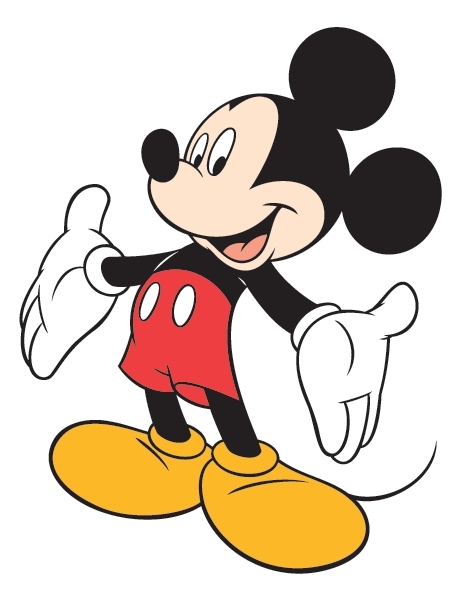
Because the Disney corporation doesn't want Mickey Mouse to fall in the public domain. I've said before that it may behoove us to simply amend copyright in a way that gives Disney infinite copyright, while everything else gets ten years. Call them an "irreplaceable cultural giant" or whatever else euphemism you want for "lots of money". Require a yearly tax that's just below what they pay in lobby money currently. To make it "fair", you could say "first ten years copyright is free, then it's X per year per work, then it ramps up until it reaches what Disney can pay.. I mean Z, which was determined after market analysis"
Only the original Steamboat Willy cartoon would even rise to the public domain. The character as we know him today is thoroughly trademarked, which does not expire.
All anyone would be able to do, is distribute free or paid copies of a historical cartoon film.
All anyone would be able to do, is distribute free or paid copies of a historical cartoon film.
> All anyone would be able to do, is distribute free or paid copies of a historical cartoon film.
But perhaps you could also legitimately create derivative works? If you didn't offer them for sale, perhaps trademark would not apply (not used in commerce)? It would be interesting for them to demonstrate injury.
But perhaps you could also legitimately create derivative works? If you didn't offer them for sale, perhaps trademark would not apply (not used in commerce)? It would be interesting for them to demonstrate injury.
You would only be able to create new derivative works of the character as he was in Steamboat Willy. Anything that we now recognize as being characteristic of Mickey Mouse would still be under copyright, because it was developed in later films.
Trademark wouldn't stop you from including Mickey in your new cartoons any more than it would stop you from showing a McDonald's.
You could use this chap[0] in your film, but you couldn't use this more recognizable figure.[1] Disney is at absolutely no risk from unauthorized films starring a black-and-white, whistling mouse.
[0]https://formaementis.files.wordpress.com/2008/11/steamboat-w...
[1]http://images2.fanpop.com/images/photos/6500000/Mickey-micke...
[0]https://formaementis.files.wordpress.com/2008/11/steamboat-w...

[1]http://images2.fanpop.com/images/photos/6500000/Mickey-micke...
Copyright and patents are not "fundamentally the same thing". A copyright gives you the right to exclude others from copying a work. A patent gives you more than that right, it gives you a monopoly over an idea (or at least a more or less vaguely defined implementation of an idea). A patent gives you the right to exclude others from using that idea or implementation even if they discovered that idea on their own and didn't copy anything.
My understanding of copyright is that it applies to the idea too. If you change the names and wording but keep the plot of a novel, even if the text are not strictly identical, you could still be sued for breach of copyright.
If you "change the names and wording" you're actually copying and making a modification. However, if by pure chance you came up with some say detective story that has a plot very similar to one of the existing billion other detective stories, no can sue you unless there is sufficient evidence that you actually infringed a copyright.
* no one can sue
Independent reinvention is a complete defense for copyright (you can't infringe copyright if you didn't copy), but not for patents (someone you've never heard of can sue you).
The courts are less clear on that. There's no statutory language that gives you copyright to the idea of a novel (which is dangerously close to genre if you ask me).
No, you can't argue that code can be treated as a patent because then you could argue that poetry can be treated as a patent and you'd wind up in a nonsensical hell of never being able to write another line of code, poetry, or prose because you'd be patenting coding and writing itself, essentially. It would be illegal to write a "hello world" program, for example. Actually, that's not that far from what's currently illegal under patent law, so I should say that you can't argue that code can be treated as a patent and make a rational argument out of it (Congress can argue that, in other words).
Many audio and video encoding algorithms are patented.
Has the EFF ever won a copyright battle? Since they lost the big one (copyright term extension), I can't think of a big win.
If you're referring to Eldred v. Ashcroft, that wasn't an EFF case.
You can see some of EFF's legal victories here: https://www.eff.org/victories , although to be honest we really need to update that list. For example, in the IP space I don't think it includes the two busted patents from earlier this year, which were being used to target podcasters and online competitions. See https://www.eff.org/press/releases/eff-busts-podcasting-pate... and https://www.eff.org/press/releases/victory-photo-hobbyist-pr...
You can see some of EFF's legal victories here: https://www.eff.org/victories , although to be honest we really need to update that list. For example, in the IP space I don't think it includes the two busted patents from earlier this year, which were being used to target podcasters and online competitions. See https://www.eff.org/press/releases/eff-busts-podcasting-pate... and https://www.eff.org/press/releases/victory-photo-hobbyist-pr...
(Oh, and another one just today, from our long-running Lens v. Universal"Dancing Baby" case. The Federal Appeals court today ruled that copyright holders must consider fair use before trying to remove content from the Internet. The court also rejected the opposing claim that a victim of takedown abuse cannot vindicate her rights if she cannot show actual monetary loss. This is a pretty major step forward in restoring the balance of copyright and free speech in the environment constrained by automated or excessive DMCA takedown notices.
https://www.eff.org/press/releases/important-win-fair-use-da... )
https://www.eff.org/press/releases/important-win-fair-use-da... )
Steve Jackson Games wasn't an EFF case, either. I was at the Steve Jackson trial as a technical expert. The EFF didn't have anybody there.
Sorry I'm late to this; at that point, EFF didn't even have lawyers on staff whold could be there. Instead it was formed to financially fund the Steve Jackson suit against the Secret Service -- that's the reason why it's has "foundation" in the name.
http://www.sjgames.com/SS/
"The EFF provided the financial backing that made it possible for SJ Games and four Illuminati users to file suit against the Secret Service."
http://www.sjgames.com/SS/
"The EFF provided the financial backing that made it possible for SJ Games and four Illuminati users to file suit against the Secret Service."
I can't call this a BIG win, but it's from today and certainly a good one: http://arstechnica.com/tech-policy/2015/09/eff-scores-a-win-...
Basically, copyright holders MUST consider fair use before sending a takedown notice.
Basically, copyright holders MUST consider fair use before sending a takedown notice.
"The solution is pretty obvious — a true legislative no-brainer: Amend the Copyright Act to eliminate statutory damages for these orphan works. Surely even Congress can see how idiotic it is that this class of invisible rights holders can keep this treasure trove of information out of the public’s hands, and there has indeed been significant movement recently (including a Copyright Office proposal to this effect) toward just such a change.
.. A [US] court would (as I read the new statute) NOT be permitted to award punitive, or exemplary, damages in orphan works cases – but the TPP seems to require that."