Uber banned in Spain(bbc.com)
bbc.com
Uber banned in Spain
http://www.bbc.com/news/business-30395093?ns_mchannel=social&ns_campaign=bbc_breaking&ns_source=twitter&ns_linkname=news_central
6 comments
At least in Germany the general rule is "as long as there's no law forbidding it, it's permitted." The problem is that there's a regulation that explicitly puts restrictions on what requirements you need to fulfill to transport other people for money - one of them being "needs authorization". And UberPop fails to meet these requirements.
There's a Wikipedia article on this:
'The jocular saying is that, in England, "everything which is not forbidden is allowed", while, in Germany, the opposite applies, so "everything which is not allowed is forbidden". ... The saying about the Germans is at least partially true. ...'
http://en.m.wikipedia.org/wiki/Everything_which_is_not_forbi...
'The jocular saying is that, in England, "everything which is not forbidden is allowed", while, in Germany, the opposite applies, so "everything which is not allowed is forbidden". ... The saying about the Germans is at least partially true. ...'
http://en.m.wikipedia.org/wiki/Everything_which_is_not_forbi...
The example quoted in the wikipedia is a bit weird, the quoted paragraph deals with the question of under which circumstances you can have owner-like rights from something that you don't actually owned but rented (or was given to you under similar circumstances). There may or may not be a legal edge case involved, but it does not directly deal with "actions permitted or forbidden."
The primary difference between common law and civil law is more among the lines that in common law systems each court decision creates a law (or is law-like) while in civil law, the law is created by the legislative.
German courts have to follow the civil code and can't change or ignore it. Even the german constitutional court (Bundesverfassungsgericht) can't create a law. It may declare a law unconstitutional, but the burden of drafting a new law falls on the Bundestag. Obviously, there will be loopholes and there's always the question of how a given law applies to the circumstances, but even lower courts are not bound by the decisions of higher courts in similar cases - though usually decisions of other courts get cited in court proceedings. A pretty famous example is the Landgericht Hamburg which is known to decide in ways that the next higher court rejects (Oberlandesgericht Hamburg) on appeal.
The primary difference between common law and civil law is more among the lines that in common law systems each court decision creates a law (or is law-like) while in civil law, the law is created by the legislative.
German courts have to follow the civil code and can't change or ignore it. Even the german constitutional court (Bundesverfassungsgericht) can't create a law. It may declare a law unconstitutional, but the burden of drafting a new law falls on the Bundestag. Obviously, there will be loopholes and there's always the question of how a given law applies to the circumstances, but even lower courts are not bound by the decisions of higher courts in similar cases - though usually decisions of other courts get cited in court proceedings. A pretty famous example is the Landgericht Hamburg which is known to decide in ways that the next higher court rejects (Oberlandesgericht Hamburg) on appeal.
And the example isn't about allowed or forbidden, it's if a legal construction holds up in court that implies a further meaning than what it literally in the books.
Something that you'll have mixed results with, no matter the jurisdiction. Just that, broadly speaking, absent a clear rule, civil law courts try to derive the intent of the closest law, while common law courts create new law through their decision.
Something that you'll have mixed results with, no matter the jurisdiction. Just that, broadly speaking, absent a clear rule, civil law courts try to derive the intent of the closest law, while common law courts create new law through their decision.
I think this mostly is about what the state is allowed to do, as the state actions are often seen as an infringement to basic rights.
I'm not sure there's such a great difference. It's very common in the USA and UK to have laws that say "you must meet requirements X Y and Z plus also obtain a license", which effectively bans everything in the area controlled by the licensing regime by default ... as you first have to convince a regulator that something is allowed, before it becomes so.
The thing about EU countries [1] that most American companies continually underestimate is: the primary focus of the legal system is to protect citizens/consumers, not companies, for better or worse. You can't escape this as a company by simply ignoring the rules or throwing money into lobbying in Brussels, whether you're Uber, Airbnb, Google or Microsoft.
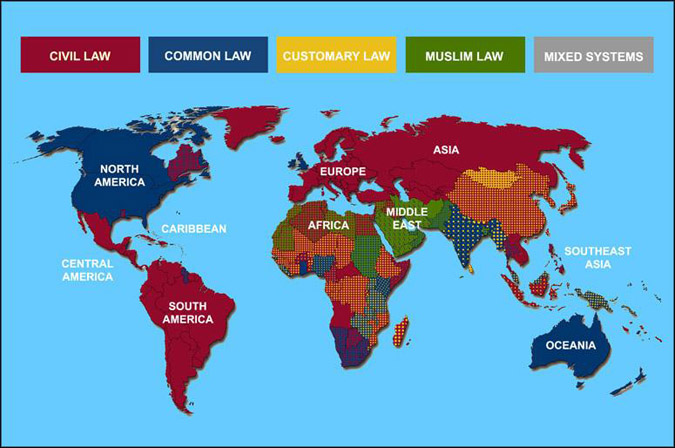
[1] Especially the ones with a civil law system which is all of them except the UK.
[1] Especially the ones with a civil law system which is all of them except the UK.
I'm not sure it's helpful to describe this as the awful corporatist Americans underestimating the strong, citizen-focussed EU.
I am a British citizen living in Europe, and I'm for one pretty happy that Uber is trying to drag the taxi industry into the 21st century. Lots of my friends like and use Uber (though I don't use them myself as for some reason the app cannot verify me), I've yet to hear a single complaint about their service.
The Spanish decision doesn't have anything directly to do with protecting people. It was triggered by complaints by the competition, it states that Uber is illegal because it's not authorised not because of some specifically bad thing they're doing .... if this is defending the consumer, why doesn't it look or feel like it?
Frankly, the chance of an Uber-like company getting started in Europe feels close to zero. If it were up to us here to shake up the taxi business and apply basic mobile technology to it, I'm not sure it'd ever happen at all. America is hardly a perfect country and its people are not a perfect people, but you must admire their drive to get things done.
I am a British citizen living in Europe, and I'm for one pretty happy that Uber is trying to drag the taxi industry into the 21st century. Lots of my friends like and use Uber (though I don't use them myself as for some reason the app cannot verify me), I've yet to hear a single complaint about their service.
The Spanish decision doesn't have anything directly to do with protecting people. It was triggered by complaints by the competition, it states that Uber is illegal because it's not authorised not because of some specifically bad thing they're doing .... if this is defending the consumer, why doesn't it look or feel like it?
Frankly, the chance of an Uber-like company getting started in Europe feels close to zero. If it were up to us here to shake up the taxi business and apply basic mobile technology to it, I'm not sure it'd ever happen at all. America is hardly a perfect country and its people are not a perfect people, but you must admire their drive to get things done.
In Europe you have different views of how markets should be regulated. In the US, deregulation and free markets are the de-facto assumption, but many European economies proudly trend more socialist than we do. Uber's typical appeal to free market economic principles doesn't go over as well in these markets.
The Spanish laws in play are absolutely not defending the consumer, they're defending the worker. That's the entire point: in the US, consumer rights often trump worker rights, but that's not the case everywhere.
The Spanish laws in play are absolutely not defending the consumer, they're defending the worker. That's the entire point: in the US, consumer rights often trump worker rights, but that's not the case everywhere.
> In Europe you have different views of how markets should be regulated. In the US, deregulation and free markets are the de-facto assumption, but many European economies proudly trend more socialist than we do.
Europeans in general seem to also have a different conception of what the word socialist means, compared to Americans.
Europeans in general seem to also have a different conception of what the word socialist means, compared to Americans.
That's changing; there's no longer the USSR to provide the evil centrally planned economy as a model. But yes, I meant socialist as in the government owns and controls aspects of the economy, with profit maximization often not the goal of those industries.
> But yes, I meant socialist as in the government owns and controls aspects of the economy, with profit maximization often not the goal of those industries.
That already has a name: mixed economy.
"Socialist" in the American vernacular is too coarse grained when talking about politics beyond its own borders, since the connotation seems to always just be "left of American politics"... :)
That already has a name: mixed economy.
"Socialist" in the American vernacular is too coarse grained when talking about politics beyond its own borders, since the connotation seems to always just be "left of American politics"... :)
I meant socialist as an adjective, not a noun. The US government has socialist policies as well: social security, for example. Also, government ownership of public transit, or the USPS. I agree the word is a bit inflammatory in the American lexicon, though that is changing as all the old people die off.
What about taxis in the uk needs dragging? I phone a taxi, they text me when they're on their way, they pick me up. Mobile apps were happening before uber came along.
The UK doesn't have the same problems as the US has, we don't have a shortage of private hires or cabs caused by a limited supply of medallions and we don't have sprawling suburbs with poor public transport.
The UK doesn't have the same problems as the US has, we don't have a shortage of private hires or cabs caused by a limited supply of medallions and we don't have sprawling suburbs with poor public transport.
Yep, that's why I said for better or worse, because it's also the reason why the EU sometimes can't have nice things.
What's wrong with Hailo? Or is that not as widespread yet? It's a godsend in Ireland
As someone who has lived for ~20 years in multiple EU countries, this is a completely delusional comment.
While corporatism in the EU is often veiled in pro-consumer language, this is nothing but a thin smoke screen. The roots of corruption go extremely deep. I'd even go as far as to say that most EU countries are ultimately governed by special interests and captive bureaucrats with only minimal input by elected officials.
One recent, relevant, and particularly egregious example: GMOs are widely banned under the guise of protecting consumers (from what, they don't say of course), while the agricultural lobby is in charge of agricultural policy: they steal ~55 billion euros per year just in direct subsidies!
While corporatism in the EU is often veiled in pro-consumer language, this is nothing but a thin smoke screen. The roots of corruption go extremely deep. I'd even go as far as to say that most EU countries are ultimately governed by special interests and captive bureaucrats with only minimal input by elected officials.
One recent, relevant, and particularly egregious example: GMOs are widely banned under the guise of protecting consumers (from what, they don't say of course), while the agricultural lobby is in charge of agricultural policy: they steal ~55 billion euros per year just in direct subsidies!
> the primary focus of the legal system is to protect citizens/consumers, not companies ... You can't escape this [by lobbying]
This is somewhat incongruous with the Spanish court talking about "unfair competition"; and with "the move follows a complaint by the Madrid Taxi Association."
This is somewhat incongruous with the Spanish court talking about "unfair competition"; and with "the move follows a complaint by the Madrid Taxi Association."
Madrid Taxi Association is not a company...
To help with the discussion, I dont think "politics love people more than in US". Just that people's "lobbies" have more "media power" than in the USA. And its a really bad timing for uber to come to our countries: anything that can sound like more unemployment its going to be rejected by government, even if it's false. Its a false dilemma, but taxi drivers are saying that government is destroying 5K jobs just in Madrid and giving them to the yankees.
To help with the discussion, I dont think "politics love people more than in US". Just that people's "lobbies" have more "media power" than in the USA. And its a really bad timing for uber to come to our countries: anything that can sound like more unemployment its going to be rejected by government, even if it's false. Its a false dilemma, but taxi drivers are saying that government is destroying 5K jobs just in Madrid and giving them to the yankees.
> This is somewhat incongruous with the Spanish court talking about "unfair competition"; and with "the move follows a complaint by the Madrid Taxi Association."
Not at all. There's regulations that you need to follow to transport people for money. Skipping these regulations to offer a cheaper fare constitutes unfair competition. Your competitors have the right to complain.
Those regulations can protect consumers - if that's the case is a different issue. (I can think of quite a couple of ineffective consumer protection laws that were passed with honest intentions but failed horribly.)
Not at all. There's regulations that you need to follow to transport people for money. Skipping these regulations to offer a cheaper fare constitutes unfair competition. Your competitors have the right to complain.
Those regulations can protect consumers - if that's the case is a different issue. (I can think of quite a couple of ineffective consumer protection laws that were passed with honest intentions but failed horribly.)
It's somewhat incongruous, not completely incongruous but not "not at all" incongruous.
You've presented a plausible argument why unfair competition is bad for consumers. But if consumer protection is the real focus, it seems likely that the court would instead have spoken about how Uber is violating such-and-such regulation which is in place to protect customers.
(And to be fair, maybe the court did explicitly talk about that as well, and the BBC didn't quote that part. I'm not drawing any firm conclusions here.)
When the court is talking about the effects on other companies, and when the court is only involved because of the actions of - krammer says it's not a company, but it certainly doesn't sound like a group of taxi customers - that's the kind of thing the court does when it's protecting companies, not when it's protecting customers. It's not damning, but it's suggestive.
You've presented a plausible argument why unfair competition is bad for consumers. But if consumer protection is the real focus, it seems likely that the court would instead have spoken about how Uber is violating such-and-such regulation which is in place to protect customers.
(And to be fair, maybe the court did explicitly talk about that as well, and the BBC didn't quote that part. I'm not drawing any firm conclusions here.)
When the court is talking about the effects on other companies, and when the court is only involved because of the actions of - krammer says it's not a company, but it certainly doesn't sound like a group of taxi customers - that's the kind of thing the court does when it's protecting companies, not when it's protecting customers. It's not damning, but it's suggestive.
The Netherlands banned the UberPop ride-sharing service too.
> "Drivers who transport people for payment without a licence are breaking the law," said the decision from the Hague-based Trade and Industry Appeals Tribunal.
This sounds like asking for a heap of trouble though:
> In a statement on Monday, Uber said it would continue to offer UberPop, despite the threat of a fine of up to €100,00 for itself, and one of up to €40,000 for drivers.
> "Drivers who transport people for payment without a licence are breaking the law," said the decision from the Hague-based Trade and Industry Appeals Tribunal.
This sounds like asking for a heap of trouble though:
> In a statement on Monday, Uber said it would continue to offer UberPop, despite the threat of a fine of up to €100,00 for itself, and one of up to €40,000 for drivers.
Goodbye sensible run rate. You can only pay fines of the magnitude "in the course of business" for so long.
You are forgetting about the strength of unions. Strikes look really bad for politicians and they are really easy to put together in countries such as Spain or France. On top of that, for some historical reasons citizens of these countries tend to support the strikers no matter what. Most of the people in Spain have never heard of Uber, so if the (government/opposition controlled) media is telling them that they are unlawfully stealing the jobs of taxi drivers, they will blindly support taxi drivers.
Regulator-politicians aren't looking to "protect citizens/consumers" they are looking after their asses, because if they were they would get rid off the current taxi system and start from scratch, or at least take an Irish-like approach.
UPDATE: This is the main reason why Uber has been banned http://ep01.epimg.net/ccaa/imagenes/2014/12/05/madrid/141779...
Regulator-politicians aren't looking to "protect citizens/consumers" they are looking after their asses, because if they were they would get rid off the current taxi system and start from scratch, or at least take an Irish-like approach.
UPDATE: This is the main reason why Uber has been banned http://ep01.epimg.net/ccaa/imagenes/2014/12/05/madrid/141779...
Re. your footnote, Malta and Cyprus also practise Common Law.
And, obviously, Ireland.
Yeah sorry, I meant most of Europe: http://www.laits.utexas.edu/lawdem/unit02/supporting/map_civ...
Banning new ways of doing things by default seems pretty anti-consumer and very pro-established corporation to me.
But like the top comment said, maybe it's a cultural thing.
But like the top comment said, maybe it's a cultural thing.
> You can't escape this as a company by simply ignoring the rules or throwing money into lobbying in Brussels, whether you're Uber, Airbnb, Google or Microsoft.
Sounds like a joke.
I live in France, and there's a lot of lobbying here. But again, we're the country of mass strikes, so...
Sounds like a joke.
I live in France, and there's a lot of lobbying here. But again, we're the country of mass strikes, so...
> In a statement on Monday, Uber said it would "continue to offer UberPop", despite the threat of a fine of up to €100,00 for itself, and one of up to €40,000 for drivers.
Classic Uber.
Classic Uber.
To be fair,I'd say that Uber doesn't even have (real) offices in most countries where it operates,therefore making it almost impossible to enforce any court decision against it.It's a bit like Airbnb.
Unless one makes the app illegal or block Uber website(which I am against),there is not much the justice can do.
On the other hand,just like with Airbnb,for the hosts and drivers,it's another story...
I would also add that,if a country really want to kick out these "sharing economy" services,they need to fine the service provider as well as the client.Not that I agree with it,just that,as long as there are clients willing to pay for it,with little risk,there will be hosts and drivers willing to take the risk to be fined.
Unless one makes the app illegal or block Uber website(which I am against),there is not much the justice can do.
On the other hand,just like with Airbnb,for the hosts and drivers,it's another story...
I would also add that,if a country really want to kick out these "sharing economy" services,they need to fine the service provider as well as the client.Not that I agree with it,just that,as long as there are clients willing to pay for it,with little risk,there will be hosts and drivers willing to take the risk to be fined.
"there is not much the justice can do."
It would be pretty east to shut down. Just give a few cops some phones have them start hailing Ubers and handing out tickets with heavy fines to drivers. Rinse and repeat until word gets around. Uber might still be operating but unless they are going to pay the tickets they will soon be out of drivers.
It would be pretty east to shut down. Just give a few cops some phones have them start hailing Ubers and handing out tickets with heavy fines to drivers. Rinse and repeat until word gets around. Uber might still be operating but unless they are going to pay the tickets they will soon be out of drivers.
That's assuming that the penalties are enforceable upon the drivers. I wouldn't be surprised to see the laws written exactly the opposite, to protect the drivers from bad actions of the employer.
I was thinking the same thing.
As a driver, (and considering Uber's history and questionable business practices) no way I'd want to get stuck with a 40K euro fine to pay on my own.
As a driver, (and considering Uber's history and questionable business practices) no way I'd want to get stuck with a 40K euro fine to pay on my own.
That's pretty much what happened in Ottawa.
I wonder if a little Internet censorship might be a possible means of enforcement. Ask the court to order mobile ISPs to block Uber.
Easy to get around, unless they also block the app stores. All Uber has to do is push an update pointing to new URLs, perhaps a long list of them, perhaps including very popular CDNs, and the block is over. Further blocking of said URL list will cause major problems for everyone, and will be the last time anyone tries Internet censorship... for a few days.
Or get an injunction against Apple and Google to stop distributing the apps.
Uber is so cute, outlaws pretending to be a corporation. How long before the executives are jailed or shot?
Uber doesn't fear a fine for its drivers, since the drivers take the hit and not the company.
Although according to the article it is risking a €100,000 fine on top of €40,000 fine given to the driver. That could rack up pretty quickly if it were on a per-violation basis.
Uber has paid fines on behalf of the drivers in the past in US cities as long as they were obeying all other laws (seat belts, max occupancy, etc).
Nobody is forcing the drivers to drive, though.
radmuzom(4)
Perhaps there is marked for more distributed approach.
no such thing as bad publicity i suppose
I know I've simplified the difference a lot, probably oversimplified it, but I often think of this broad distinction when I see cases like this one.