Mercedes Boots Robots from the Production Line(bloomberg.com)
bloomberg.com
Mercedes Boots Robots from the Production Line
http://www.bloomberg.com/news/articles/2016-02-25/why-mercedes-is-halting-robots-reign-on-the-production-line
57 comments
The rapid updating of car models is either going to be a success or blow up in the car manufacturers face. The sales of cars has been high over the past few years, but economically sustaining car sales year and adding growth year of year is not feasible with the current model of purchasing and holding onto a car as a long term liable asset. Newer business models will be needed to make this shift for newer model sales on a smaller time frame. I see a big push for leasing coming.
This is already happening, at least in the UK. I don't have the numbers but leasing is being pushed heavily by advertisers and is becoming the normal way for people to get hold of a new car who mightn't otherwise.
> I don't have the numbers but leasing is being pushed heavily by advertisers and is becoming the normal way for people to get hold of a new car who mightn't otherwise.
At least in the US, the problem is that if you total the car during your lease, you owe the remaining value of the car. That makes leasing an absolutely horrible decision in the US--all the downside of buying a car with none of the upside.
How is the UK dealing with that?
At least in the US, the problem is that if you total the car during your lease, you owe the remaining value of the car. That makes leasing an absolutely horrible decision in the US--all the downside of buying a car with none of the upside.
How is the UK dealing with that?
What state are you in?
Gap insurance has been a requirement for every lease contract I've ever signed. Which means that the difference is paid by insurance.
And no, leasing is sometimes an excellent decision, let's not be silly.
Gap insurance has been a requirement for every lease contract I've ever signed. Which means that the difference is paid by insurance.
And no, leasing is sometimes an excellent decision, let's not be silly.
Here in South Africa, you can't do either without proving that you have insurance for full-coverage of the value of the car.
Insurance is surely required to cover the financial exposure on the lease?
All part of the culture of debt forever.
A car is not an investment. I lease a new car every 3 years as a daily driver because the opportunity cost of dealing with maintenance and other issues is so high.
I have no ownership, it is an expense just like gas and insurance. I am buying the ability to get around freely and not indebting myself as I would with a purchase. At the end of 3 years I can simply walk away.
You can get a lease for a silly small amount of money if you play your cards right. Check out leasehackr.com . Right now I could walk into a Ford dealer and walk out with a Ford Fusion for $147/month. Or if I don't want to deal with gas I could get a Fiat 500e for $99/month. I spend more on coffee than that!
I have no ownership, it is an expense just like gas and insurance. I am buying the ability to get around freely and not indebting myself as I would with a purchase. At the end of 3 years I can simply walk away.
You can get a lease for a silly small amount of money if you play your cards right. Check out leasehackr.com . Right now I could walk into a Ford dealer and walk out with a Ford Fusion for $147/month. Or if I don't want to deal with gas I could get a Fiat 500e for $99/month. I spend more on coffee than that!
Yes but back in the day people were "ahead" in that they had money saved up to buy a car, rather than just breaking even by making enough to be able to "afford" a car. The idea of "indebting yourself for ownership" - a contradiction in itself - wasn't respected, nor taking on too many monthly commitments that depend on a steady income.
Exactly, it's taking a greater share of income over the same time period because repayments are staggered.
Your lease is a debt with a three year term. To the extent that you lease a new car every three years, your debt is forever.
I used to be in this "leasing is stupid" camp but now I understand why people do it. As a lessee you are essentially paying for the depreciation on the car while you drive it. The depreciation on a new car is the worst, but that's for a good reason: those first few years of car ownership are the most hassle-free. No random breakdowns, no going to the shop and hearing "you need a new xxx" or, even worse, "hard to tell what that sound is, leave it here for a day while we figure it out." That's the last thing I need to hear when I need a car to get to work.
Leasing can be seen as a fixed payment that always gets you reliable, newish transportation with less hassle. Sure it costs more than buying a car and keeping it for ten years, but after taking my ten-year-old car to the shop and putting thousands into it, and after seeing that it lacked newer features like the car seat "LATCH" points, I see that driving a ten-year-old car is no panacea either and might not be worth the cost savings.
Leasing can be seen as a fixed payment that always gets you reliable, newish transportation with less hassle. Sure it costs more than buying a car and keeping it for ten years, but after taking my ten-year-old car to the shop and putting thousands into it, and after seeing that it lacked newer features like the car seat "LATCH" points, I see that driving a ten-year-old car is no panacea either and might not be worth the cost savings.
LATCH became essentially standard in fall of 2002, so is probably no longer a factor in a leasing decision.
Modern cars are wildly more reliable than even 20 years ago, IMO. The 10-year old piece of crap I drove 15 years ago is not the same as the same as the 11-year old car my wife drives everyday.
Modern cars are wildly more reliable than even 20 years ago, IMO. The 10-year old piece of crap I drove 15 years ago is not the same as the same as the 11-year old car my wife drives everyday.
I don't need a car forever. If I decide to move to Singapore or Honk Kong or even San Francisco/Manhattan proper I will probably not need a car.
The Fiat 500e lease example above is a great example because I'm only in for $3600 for 36 months. Name a car that you can purchase outright for $3600 that will never need unplanned service, replacement tires, etc.
The Fiat 500e lease example above is a great example because I'm only in for $3600 for 36 months. Name a car that you can purchase outright for $3600 that will never need unplanned service, replacement tires, etc.
It's not about purchasing a car outright for $3600, it's that at the end of the lease you have to (not "get to") walk away.
I put 50-100,000 miles on cars that start with about 100,000 that I buy for $3000-$5000. I haven't needed much unplanned service, largely due to luck and buying well-maintained cars. When I am done with the car, I sell it for about $1000-$1500 less than I paid for it. And the insurance on these cars is MUCH cheaper than for a new car.
So by not "getting to" walk away at the end, my total cost is not $3600, but $1500. You could buy a car for $10000 and sell it at $6400 if you wanted a newer model.
But the big difference is that if I get laid off or have to file for disability or something, I have an asset that I can keep using instead of upgrading if I want, or sell if I need the money. A lease is a liability!
I put 50-100,000 miles on cars that start with about 100,000 that I buy for $3000-$5000. I haven't needed much unplanned service, largely due to luck and buying well-maintained cars. When I am done with the car, I sell it for about $1000-$1500 less than I paid for it. And the insurance on these cars is MUCH cheaper than for a new car.
So by not "getting to" walk away at the end, my total cost is not $3600, but $1500. You could buy a car for $10000 and sell it at $6400 if you wanted a newer model.
But the big difference is that if I get laid off or have to file for disability or something, I have an asset that I can keep using instead of upgrading if I want, or sell if I need the money. A lease is a liability!
Also car markets are highly liquid. If you buy a common car there will be a buyer waiting to take it off you.
Your life is a debt with a life long term. To the extent that you need to eat food, your debt is forever.
Some might suggest more frugality on the coffee expense as well. ;)
There's nothing wrong with leasing, particularly if you prefer (and have the means to readily afford) to always drive a car 0-3 years old. If you have that preference, leasing is often the best choice.
The real problem is that preference is a very expensive preference and is being opted into by many people who probably should be being more frugal.
There's nothing wrong with leasing, particularly if you prefer (and have the means to readily afford) to always drive a car 0-3 years old. If you have that preference, leasing is often the best choice.
The real problem is that preference is a very expensive preference and is being opted into by many people who probably should be being more frugal.
On the Mercedes AMG performance line, a single master craftsman builds the engine by himself. His signature is on the engine block. Mercedes doing something like this is interesting but they are a niche, luxury manufacturer (though they are the largest luxury brand at least in the us and maybe world wide). A change like this at Toyota would be more interesting to me.
I don't think I'd use the phrase "master craftsman" unless my paycheck came from their marketing dept.
Being able to do a high quality, consistent job assembling engine after engine is not a huge feat, it just takes a lot of attention to detail. Being able to spec out and effectively execute a particular engine build is on a whole different level and the latter is what I'd be more inclined to call a "craftsman"
The former doesn't need to care (but they likely do since anyone with that job probably does automotive stuff as a hobby) about things like how camshaft specs, rod length, piston velocity, intake design and about a million other variables interact with each other to affect performance of the whole system. The latter needs to be intimately familiar with them while also being able to do the job of the former.
To put it in terms more people on HN will understand, the guy assembling the engine is like the user of some backed software stack. Sure they might write some scripts that interact with parts of the stack but they're nowhere near as well versed in how does what it does and why it does things the way it does when compared to the engineer who designed and built the stack.
Being able to do a high quality, consistent job assembling engine after engine is not a huge feat, it just takes a lot of attention to detail. Being able to spec out and effectively execute a particular engine build is on a whole different level and the latter is what I'd be more inclined to call a "craftsman"
The former doesn't need to care (but they likely do since anyone with that job probably does automotive stuff as a hobby) about things like how camshaft specs, rod length, piston velocity, intake design and about a million other variables interact with each other to affect performance of the whole system. The latter needs to be intimately familiar with them while also being able to do the job of the former.
To put it in terms more people on HN will understand, the guy assembling the engine is like the user of some backed software stack. Sure they might write some scripts that interact with parts of the stack but they're nowhere near as well versed in how does what it does and why it does things the way it does when compared to the engineer who designed and built the stack.
„Meister“ (literally “master” in English) is just the certificate you get after finishing some vocational trainings in Germany (includes theory and practice).
Vocational training is still somewhat widespread in Germany (for jobs like mechanics, hairdressers, even sys admins, some more rote programming jobs, …) also as an alternative to going to university.
Now, I’m not sure whether typical assembly line workers have that kind of education (probably not? but I’m not sure), so having someone with this kind of education assemble your engine for you might be a step up, but I also think there is a mismatch going on here between what the English words seem to imply and what the German word means.
Vocational training is still somewhat widespread in Germany (for jobs like mechanics, hairdressers, even sys admins, some more rote programming jobs, …) also as an alternative to going to university.
Now, I’m not sure whether typical assembly line workers have that kind of education (probably not? but I’m not sure), so having someone with this kind of education assemble your engine for you might be a step up, but I also think there is a mismatch going on here between what the English words seem to imply and what the German word means.
I assume it's something like being a "master mechanic" but it seems like a fishy marketing move to call them "craftsmen" so they can say "master craftsmen" when they basically mean "certified technicians."
The best selling luxury manufacturer in the US is BMW. They're followed by Lexus and Mercedes-Benz, but those two aren't far behind either. Toyota took a similar approach to how AMG cars are created when they made the Lexus LFA. They only built 500 models of the LFA, but those were all custom ordered and buyers had a huge array of options to choose from: http://www.lexus.com/lexus-share/v2/img/models/LFA/explore/L...
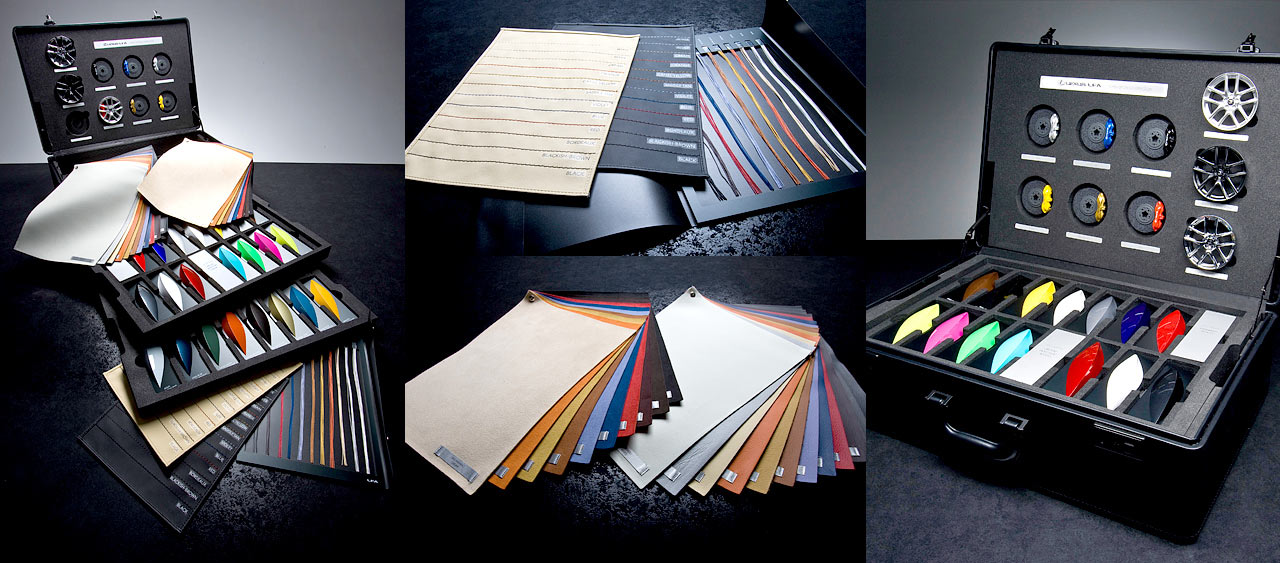
> A change like this at Toyota would be more interesting to me.
from 2014: http://www.bloomberg.com/news/articles/2014-04-06/humans-rep...
from 2014: http://www.bloomberg.com/news/articles/2014-04-06/humans-rep...
Yes, I came to make this comment. Toyota has been very vocal about making this change. The rationale from Mr. Toyoda himself was something like:
(1) Robots are not great at improving on their own work in the same way that humans naturally are.
(2) When he was a boy, Mr. Toyoda recalled that there were always a few men around the factory who were capable of extremely creative and ingenious solutions to difficult problems of logistics or fabrication, and he feels that this skill is being lost.
Anyway, this has been a major consideration for the current management at Toyota for some time.
(1) Robots are not great at improving on their own work in the same way that humans naturally are.
(2) When he was a boy, Mr. Toyoda recalled that there were always a few men around the factory who were capable of extremely creative and ingenious solutions to difficult problems of logistics or fabrication, and he feels that this skill is being lost.
Anyway, this has been a major consideration for the current management at Toyota for some time.
[deleted]
> We’re saving money and safeguarding our future by making a good PR move
FTFY.
Seriously though, the only reason is because they are customizing and non-intelligent robots are not good at making variations.
This doesn't solve the fundamental problem coming of robots who can handle variation.
And as encoderer noted, this is a niche luxury market.
FTFY.
Seriously though, the only reason is because they are customizing and non-intelligent robots are not good at making variations.
This doesn't solve the fundamental problem coming of robots who can handle variation.
And as encoderer noted, this is a niche luxury market.
Exactly right. But they are selling it like some miracle anti-technology movement.
>“The variety is too much to take on for the machines,” said Schaefer, who’s pushing to reduce the hours needed to produce a car to 30 from 61 in 2005. “They can’t work with all the different options and keep pace with changes.”
it sounds like they just have bad software
it's not like there are random variations or an uncontrolled environment.
in the end there's still only a finite menu of options. don't they just need better software for combining the options?
like... it costs more to program the routines than to train and employ people to do the job?
it sounds like they just have bad software
it's not like there are random variations or an uncontrolled environment.
in the end there's still only a finite menu of options. don't they just need better software for combining the options?
like... it costs more to program the routines than to train and employ people to do the job?
> it costs more to program the routines than to train and employ people to do the job?
Exactly. The S-Class is not exactly a high volume vehicle, and it has a huge number of options. Given the low number of vehicles and the combinatorial explosion of different option combinations, it's quite possible that a custom S-Class is unique.
Exactly. The S-Class is not exactly a high volume vehicle, and it has a huge number of options. Given the low number of vehicles and the combinatorial explosion of different option combinations, it's quite possible that a custom S-Class is unique.
Ford sold more Focus models in June 2015 than Mercedes sold S-Class models in the entire year.[0, 1]
[0] http://www.goodcarbadcar.net/2011/01/mercedes-benz-s-class-s...
[1] http://www.goodcarbadcar.net/2011/01/ford-focus-sales-figure...
[0] http://www.goodcarbadcar.net/2011/01/mercedes-benz-s-class-s...
[1] http://www.goodcarbadcar.net/2011/01/ford-focus-sales-figure...
...Marketer-speak meaning it erodes the "je ne sais quoi", that which is undefinable, about very expensive, often hand-made, goods. That is the real reason - how can you persuade big spenders that something is unique and valuable if it came from a factory, a robot? even if said quality may be demonstrably superior? (edit:said inferior).
A cheaper way of solving this problem would to be to make the cars less complicated. Just offer colour variants and give every option included in the base model. Economies of scale will create your profits.
People who buy custom spec'd Mercedes don't want cars that base-model plebs can afford. The options aren't there to increase the feature set, they're there to make the buyers feel special.
No they're not. They are there because someone in Minnesota will almost certainly spend $500 on heated seats and thank you for the privilege while someone in Miami won't.
Or maybe people just like to customize their cars. Like the teenager with the Civic and the neon lights, or the guy with the Jeep and the big tires.
something tells me sales would plummet?
one example out of many - what about various gearboxes? some people swear by automats, I would not want such a car for free. leather/fabric interior, various suspension setups (hard & more enjoyable vs comfy & puddy). various light options (each has pros and cons). tyres size, rims design. etc etc etc.
I am pretty damn sure I want a different car than you, ignoring color.
one example out of many - what about various gearboxes? some people swear by automats, I would not want such a car for free. leather/fabric interior, various suspension setups (hard & more enjoyable vs comfy & puddy). various light options (each has pros and cons). tyres size, rims design. etc etc etc.
I am pretty damn sure I want a different car than you, ignoring color.
All those extra complications are really about extra profits for the manufacturer, there is no way they will give them up.
That's no different than suggesting that computers be identical except for the color.
[deleted]
Article seems to speak out both sides of its mouth, that robots are going away for Mercedes, and also that tons of small robots are being added. Anybody else get that takeaway?
My takeaway:
They are removing robots that are cordoned off into areas to keep workers safe. These robots are not very good at customizing/changing quickly.
What they are being replaced with is people and much smaller robots that work side-by-side with those people. Assisting more than trying to do it all.
They are removing robots that are cordoned off into areas to keep workers safe. These robots are not very good at customizing/changing quickly.
What they are being replaced with is people and much smaller robots that work side-by-side with those people. Assisting more than trying to do it all.
Sounds like a business opportunity to build better robots.
The large Robot manufactures such as ABB are already working on such solutions: http://new.abb.com/products/robotics/yumi
Fanuc also has a collaborative robot:
http://www.fanuc.eu/de/en/robots/robot-filter-page/collabora...
http://www.fanuc.eu/de/en/robots/robot-filter-page/collabora...
The real billion dollar idea is robots which don't need engineers to instruct them. These robots will simply learn from humans who literally show them e.g. how to pick parts from a conveyor and put them in wire mesh crates.
That is what Rod Brooks is pushing with Rethink. We'll see if it works.
This robot almost does this, you take its hands and 'show' it what is should do.
I think the takeaway is:
Humans assisted with robots are superior to just robots when the variety is high.
Humans assisted with robots are superior to just robots when the variety is high.
Yup. Though I have to think that people are also more likely to make a mistake and your custom car might show up with the standard cup holder when you ordered the heated. The robot might be inefficient at doing the variety of tasks required for such customization, but it is certainly better at keeping track of just what ought to be done.
Isn't this just the consequence of booming luxury car sales as the rich-poor gap widens?
http://fortune.com/2015/02/17/luxury-car-sales/
Luxury car brands get more sales therefore they need to compete fast and don't have time for automation.
http://fortune.com/2015/02/17/luxury-car-sales/
Luxury car brands get more sales therefore they need to compete fast and don't have time for automation.
[deleted]
I'm curious to know if the workers replacing the robots will be German.