Much of my team would probably qualify me as about as buyer-pull as sales people get — I told my VP my strategy for pipe generation in a QBR was exercising more product influence — and I disagree with many of the author’s points.
I challenge my customers and attempt to convince them they have the wrong approach to achieve X all the time.
Attaching to buyers pain is the only way you’ll ever get anything meaningful done.
Identifying and building the pain and knowing you have the solution is how you create urgency. If you’re doing it right that work is valuable for your customer and your company.
Most people need to see something before they’re willing to invest team time mapping solution to pain / use cases.
Some customers completely drop the ball on deployment. People get fired. People leave and the project gets abandoned. Shit happens. It’s rarely the vendor’s fault, unless it was a complete mismatch, and that’s everyone’s fault.
The suburbs around San Francisco don’t really count, in my opinion. I also live in one with a Michelin star restaurant and plenty going on, but I still struggle to participate in a lot of it with a toddler. It’s a far cry from the Texas suburbs I grew up in that more closely resemble the description above.
From what I hear, time begins to return as they reach some amount of independence around 4-5. If you have more than 1, that’s a pretty big window.
That said, my daughter is incredible, and the issue isn’t that I don’t have any time. It’s that I choose spend as much of it with her as I possibly can.
I hear you, but my point is the broad definition of shoe = “thing that protects your feet” shouldn’t be applied to either, anymore than “thing used to drive other things into things” should be applied equally to hammers, sledgehammers, mallets, and fence post drivers.
Yeah, they all do that, but they all do it in different ways and for different reasons and are adorned to match the specific outcomes they’re after, not just as superfluous ornamentation.
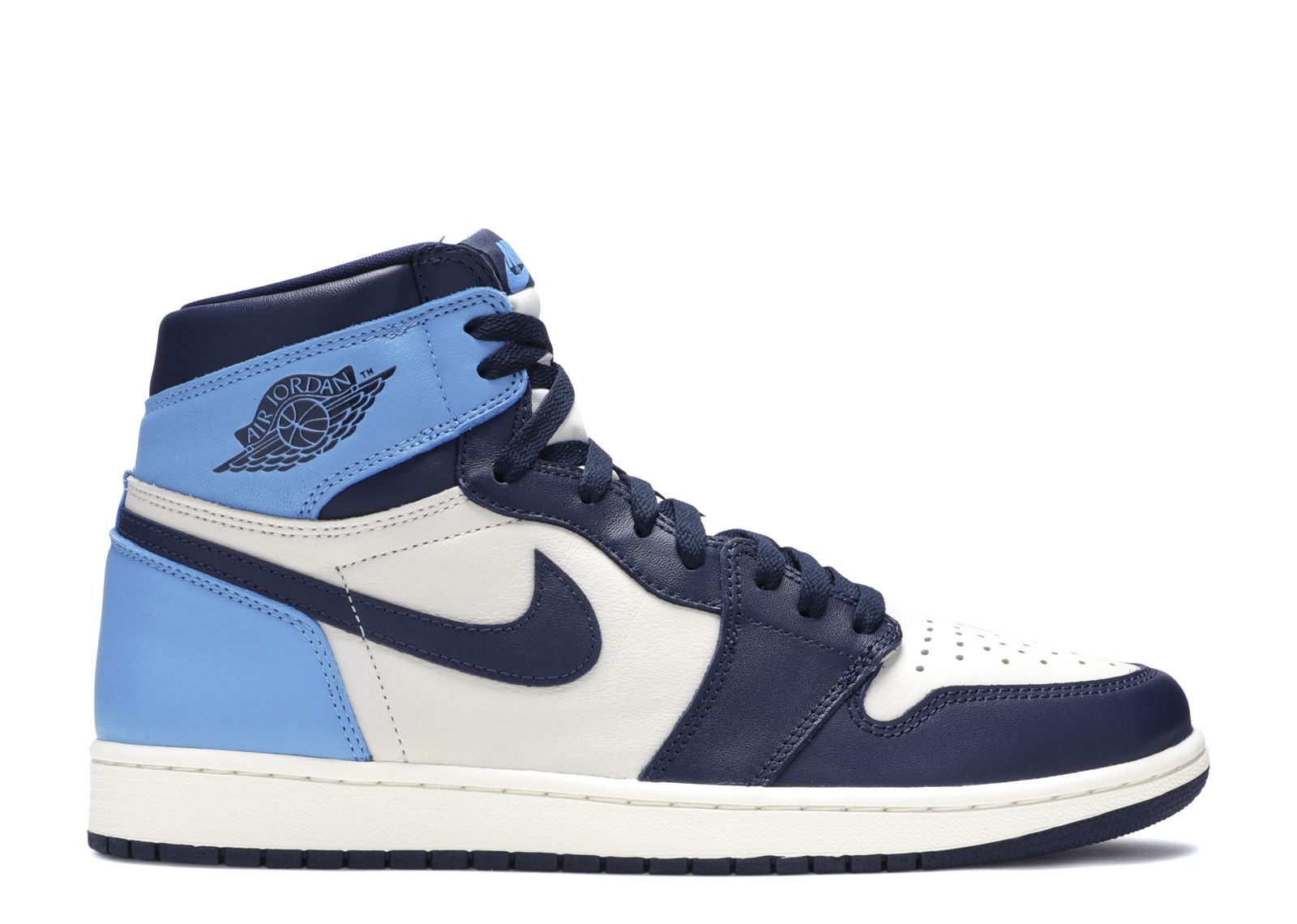
Look closer at the high-tops he shows (https://cdn.flightclub.com/TEMPLATE/152035/1.jpg). They are reinforced around the ankle, heels, and toes, because that’s where they are most stressed by a basketball player. They have vents, so the players feet don’t get too hot. Those are necessary design elements. The only thing that could be simplified, and still do the job as well, is the color scheme and Nike logo.
That’s why they’re timeless, which is exactly what Rams was saying. If you shift the category from shoe to running shoe, or ballet shoe, the essential elements shift, and the ideal design shifts with them.
“There’s no functional purpose for wearing a watch anymore.”
This could not be further from the truth. If anything, the advent of tech watches has made it even more clear to me how valuable a watch that runs forever and never needs to be removed is. To have certainty that 24/7/365, I can look down and immediately know what time it is has been tremendously helpful, and the design of that watch is incredibly important to that end.
I wear a dive watch with a nato strap, because it’s light, durable, and comfortable enough to have completely disappeared years ago. It never comes off.
I disagree with most of this video. He uses incredibly minimalist high heels as an example of counter-minimalism, presumably asserting that they should be flats, which ignores the entire purpose of heels. Heels are a tool used to achieve a certain posture, appearance, and an associated response. They’re designed to do a job, as are the basketball shoes he keeps showing, which are functionally reinforced in certain areas, but otherwise fairly minimalist too.
Their investment in Tesla alone would be more than enough evidence, if they got in near their IPO.
Throw in an investment in Apple when everyone started switching to Mac circa 2006 (I told everyone who would listen to buy it, but I was a college freshman, so no one listened, but it was so obvious), and you got a stew going.
It didn’t take anything fancy to crush the market if you started 20 years ago and were dialed into tech.
This is why I live in California. I want to prefer the outside to the inside. I want fast food to be non-existent. I want walking/biking to be quicker than driving.
Anything that nudges me towards a better lifestyle is a bonus.
To be fair to them, taking a great picture at a pumpkin patch is an American tradition. They often go on the Christmas Card. I was out there attaching a tripod to a fence and trying to get a good family portrait for my daughter’s first year walking.
If they spent the majority of the day outside, I feel like they have a leg up on many kids who never leave the house.
I was trying to do similar things on MySpace when I was their age; Or spending similar amounts of time chained to my desk chatting with girls on AIM; Or more frequently losing 8 hours at a clip to playing an FPS.
I had one staying in my house this weekend. They’re not as bad as we think they are. Most of my concern sits with the way the parents behave.
I agree with most of what you’re saying here, but something that I didn’t communicate well is how far reaching this consumerism is.
‘Everything is bigger in Texas’ is actually a legitimate characterization. Bigger portions, bigger houses, bigger vehicles, etc. (I grew up there, live in NorCal now)
Bigger => more consumption. You naturally buy less when you run out of places to put things. Europe is tighter. Public transit is better. Groceries are walkable, so you buy less more often, and only what you need => less waste.
Paper towels aren’t even really a thing over there. Of course they exist, but no one buys 24 packs. They use rags. Same story for toilet paper. They use bidets.
Most Europeans grow up playing football (soccer) or rugby and take up running as later life exercise. Americans are much more likely to exercise in ways that requires a bunch of purchases. They have space for home gyms that Europeans wouldn’t dream of, often even if they’re not wealthy.
There are fewer public spaces, so people seem more likely to consume during leisure time in whatever way suits them (like aforementioned shopping, nails, bowling, movies, gun range, etc).
Anyway… all of that to say my original comment was light on content, but there are massive cultural differences that go way beyond the way a few wealthy people present themselves that contribute to my sense that Americans are generally much more consumptive.
That’s fair. I appreciate the effort you put into the clarification.
I do agree with OP, but I do not believe either of us have provided sufficient evidence to establish our assertions as indisputable, and wouldn’t have expected my comment to be convincing.
It would be impossible to communicate the life experience that has led me to my belief in a written comment, so I guess a better response to the person who responded to me would’ve been: “I did not arrive at my conclusion in the way that you have suggested, but I do stand by my broad belief.”
Did I make claims about entire countries, or did I readily admit that I was only sharing my own small taste, explicitly stating that it shouldn’t be sufficient for broad conclusions?
My evidence is only anecdotal, but as someone who grew up in, and lived all over America, and lived abroad, I couldn’t agree more with OP. My friends in London, and their friends, many of whom grew up quite wealthy, were nearly indistinguishable from anyone else in London. They rarely bought anything (except drugs), even on vacation (I traveled with a few a couple different times).
In America, people proudly declare shopping a hobby.
I challenge my customers and attempt to convince them they have the wrong approach to achieve X all the time.
Attaching to buyers pain is the only way you’ll ever get anything meaningful done.
Identifying and building the pain and knowing you have the solution is how you create urgency. If you’re doing it right that work is valuable for your customer and your company.
Most people need to see something before they’re willing to invest team time mapping solution to pain / use cases.
Some customers completely drop the ball on deployment. People get fired. People leave and the project gets abandoned. Shit happens. It’s rarely the vendor’s fault, unless it was a complete mismatch, and that’s everyone’s fault.