You can use capacitive water sensors taped to the outside of non-capacitive containers (aluminum foil, a resistor, an arduino, and a plastic 5 gallon container), but honestly all you need are DNI timers to "automate" any grow operation. Put your lights and pumps on a schedule and there is absolutely no reason to get more creative. If you do anything besides low-level timers you're making it complicated and brittle with no added benefit.
Do you know that Microsoft Bing maps also "steals" the OSM data? They did some very clever "reverse stealing" as well when they contributed back to the project by providing millions of accurate building footprints.
Yes, I'm being sarcastic. It's a win-win situation when ANY large mapping group joins OSM. At the very least; they will accidentally contribute road-level improvements when they work with the data. I rely upon OSM data and need these large players throwing their weight behind this mapping system.
This! All of the companies kept shortening their dopamine cycle to compete with each other and now people can’t focus in real life for more than 5-10 seconds before they are mentally searching for the scroll button to find a new interaction.
You should drop down a few layers on the OSI model and catch this at your reverse proxy instead of publishing login pages to catch every permutation of 'wp' in urls.
All soil moisture sensors will eventually become uncalibrated, wear out, or fail.
The only automation you need to keep a plant alive is a timer attached to a water source. Also, don't forget to feed it with nutrients every month or so... they don't eat soil and letting a plant starve isn't proof you needed a moisture sensor.
I refused to reward Google with traffic on their newly forced ads for every youtube video. You should boycott them too until they U-turn on this bad decision.
Totally agree. I’m thinking in terms and concepts like “iptables”, “ipset”, “fail2ban”, “cidr”, “asn”… while everyone else is thinking about how to change their cloudflare settings.
OP even said they gave up on cloudflare but people are trying to upsell him on the higher tiers through this hn post!
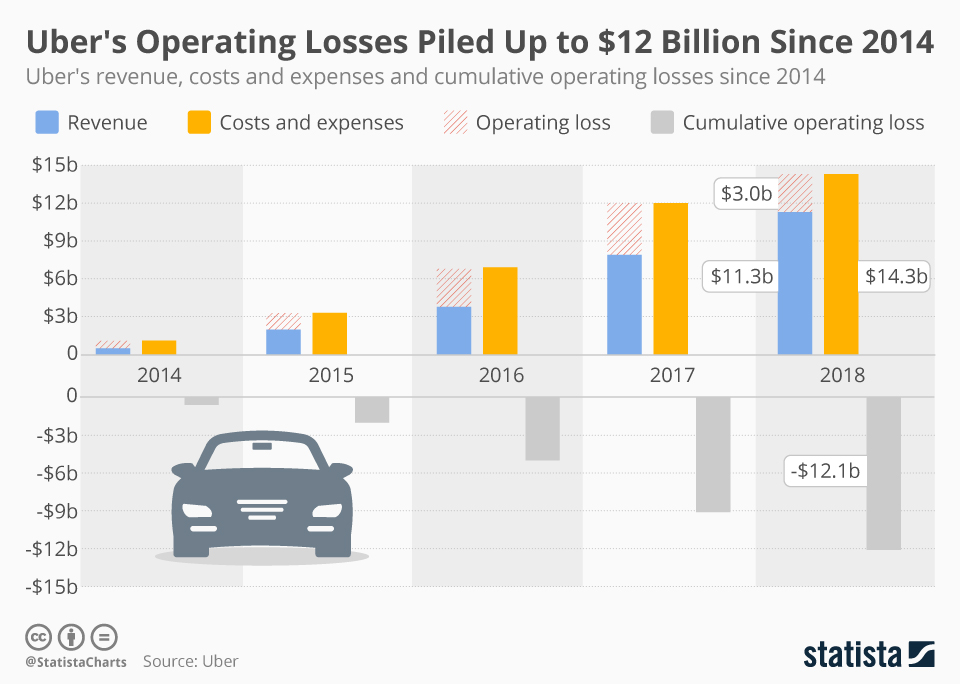
"Uber Technologies Inc (UBER.N) on Thursday reported its first profitable quarter on an adjusted basis since it launched more than a decade ago - November 4, 2021"
> you really shouldn't be hacking some scripts on top of your bank login
You can hack whatever you want, but from a SECURITY perspective this is horrible and the banks know this. There are secure ways to store credentials for scripts but most people will just hard-code the values or stick them in unencrypted ENV vars. Also, who's fault is it when the bank updates their website and the selenium script does something horribly wrong? Tell me more about Disney...
When a selenium worker is attached to a pay-for-solution captcha service the infinite loop of captchas that can be solved but don't provide access would be meant to drain you financially. You uncovered a pretty sweet (dark) pattern implemented by Cloudflare to screw bot owners.
This is just #2 and #3 combined.
It sounds like this is working as intended and also wastes your time with un-passable captchas instead of you spending more time trying to figure out how to get around their bot protection.
Another observation here is that you really shouldn't be hacking some scripts on top of your bank login. The banks know this and they are trying everything possible to dissuade you from doing this.
Cloudflare provides products that protect against malicious requests. They don't help craft those requests, and they don't flood traffic to websites that aren't using their product. It's not a racket.
> Seeing that over 90% of my traffic load was malicious and abusive was frustrating.
That story nailed it.
> If you’re curious, Cloudflare did pay me for the site. We made a deal for them to pay me $8.03; the cost of the domain registration. The goal was never to make money from the site.
A little more than $1, but basically the same idea.
If you expose a web server to the internet today you'll get 10 malicious requests for every 1 legitimate request.
This constant and unrelenting beating at your doors doesn't go away unless you add perimeter protection.
The options here are:
1) Block the IP and cidr ranges that are giving you trouble
2) Silently scan the connection request and block it when things look fishy
3) Provide a challenge in the return response that is difficult for bots to complete
Most of the bot protection on the internet is #2 where you don't notice you've been verified as a human and the site just loads. People hate #3 of completing a challenge, but the other option here is #1 where the site doesn't load at all.
Anyone who monitors their web traffic would tell you the bots are ruining the web.
I hate these "are you human" checks too, but when a persistent threat is poking your defenses and legitimate web traffic is only 10% - 20% of your server load... you have to do something.
So the alternative here to receiving a challenge is that the site would just be blocked in your country or for your network provider.
Would you prefer to be outright blocked, or is it ok to have an annoying "are you human?" challenge?
This article with the sections "Why I'm Right", "Why You're Wrong", and "Conclusion" is the perfect blogspam I'd expect from Viget. You guys don't have anything of value to say and I got this same "I'm better than you" treatment when I interviewed to be a dev at your shop years ago. I'm not salty because I got turned down; I'm responding today because you guys are pompous and are spreading that attitude with bad hiring practices in my area, and garbage blog posts in my neck of the internet.
I already have a docker registry too, so I guess I missed the point of your entire article. You can use the registry as a cache for build artifacts... that's what it's for. Your article was written like you just figured that out, and I was providing context to the other confused HN users.
There are legions of people who swore off anything M$ years ago when they found alternatives that worked better for them, and they stuck to it.
Here's the perspective from the outside: M$ has billions of lines of code, or more, and they just keep patching their software. They established their way of doing things years ago with DOS and have built on top of that since. That's how the entire industry has done it, but since M$ got so big they can't just refactor things and drop support without a billion people yelling at them, so they keep the old code and just keep patching.
They have so many people banging on their software that most of the failures are caught pretty quickly, but then there are the edge cases that don't fit into daily business activity and M$ gets pwned in that space. Their software is so vast that it doesn't cover their entire decision tree, so on the edges people begin to play around and find things not covered by testing. They might be complicated exploits that tie many things together, but it's not beyond the general public to find them with a little digging. This opens up a full exploit on M$ systems or infrastructure, then they get around to patching it a month or two later.
From the perspective of a CISO this is unacceptable. I prefer my auth software to be explicitly precise.
This might sound crazy to someone who is in an industry where "everyone is doing it", and there appears to be no other way to integrate but with M$. I'll let you know we both feel the same way because it's crazy to use (and pay for) such slovenly designed software.