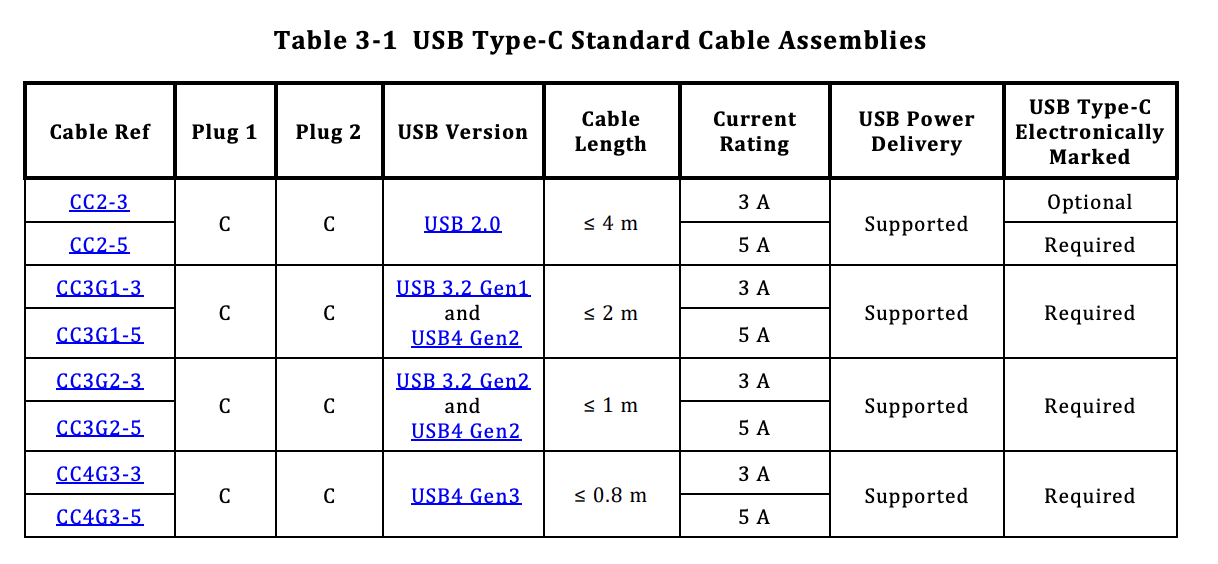
not that it really solves your problem, but any compliant USB-C to USB-C cable is required to support at least 60W of power and USB 2.0 speeds.
Unfortunately, beyond that it gets pretty bad and spotty for a casual user. I make sure to only buy reputable cables that support 240W (this isn't an expensive feature: it just means the cable supports 20V, effectively), and I have only two cables that support the full Thunderbolt data rate. But those are effectively tethered to my Thunderbolt dock and I don't use them generically.
This is largely because early screen-space AO techniques weren't able to accurately estimate whether the pillar is freestanding (and shouldn't darken the wall) or if it is against the wall (and should darken the wall.)
Modern real-time ambient occlusion techniques can estimate the depth far more accurately and produce correspondingly more believable results, at the cost of performance.
Was it a built-in camera cover, or a third-party one? Apple specifically (and possibly other manufacturers?) recommends against third-party covers because the tolerance is so close:
I live near this roundabout and drive through it almost daily.
> Drivers going northbound on SR 203 traffic may need to yield twice – once when entering the roundabout and again if traffic is passing between the two islands. If you think about it, that’s just following the same rules a second time.
The one key difference from the average (American) roundabout is the second yield. After you've waited your turn and entered the roundabout, you're required to yield again within a few feet. Obviously this is not an impossible task, but the signage leading up to the roundabout from northbound SR 203 doesn't at all indicate the shape of the roundabout. The navigation sign at the entrance only shows a single roundabout.
The second yield point is indicated with the standard yield sign and triangle markings on the road. But judging by the amount of detritus scattered on the ground, as well as the recent addition of "YIELD" text painted on the road and orange flags attached to the yield sign (both not present at any other entrance to the roundabout), the yield-twice pattern is not obvious to everyone.
Plus, the topology of the roundabout isn't conducive to seeing this from the ground, either; the relatively sharp right turn leading into the roundabout places the second yield sign out of your forward vision when you're approaching the roundabout, and the whole intersection itself is very slightly tilted away from the northbound entrance, making it really tricky to see and understand it when approaching.
---
Anecdotally, almost every time I've driven through here while there is simultaneous traffic from northbound SR 203 and northbound 203rd St. SE, the northbound 203rd St. SE traffic ends up being cut off by drivers failing to yield at the second entrance.
Unfortunately, it's not. Driving from right-to-left (in the first picture) requires drivers to enter the roundabout twice, then leave once. Judging by the amount of vehicle debris generally present and the additional "Yield" markings and signage that have been added to the second yield point since the construction was completed, it's been confusing from the ground as well.
(I agree with you, for what it's worth - Apple is weirdly slow to update some of their products; AirPods Max stand out here as missing USB-C and the lossless audio of AirPods Pro.)
Related: the Ariane 5 rocket failed on its maiden flight because it reused code from its predecessor, which made an assumption that didn't apply to the higher-performance Ariane 5.
It has been a while since they've talked about that price, and I would not expect it to be anywhere near that price point today, given <gestures at everything>.
The Rivian has a 4.5 foot bed[0] and the F-150 Lightning has a 5.5 foot bed[1]. I don't think it's fair to call Cybertruck a novelty item based on its capabilities, especially compared to its competition.
(Of course there are completely legitimate downsides of Cybertruck - for example, with the sloped bed sides, it won't be able to tow a fifth wheel trailer. But that is a capability the vast majority of truck owners don't use.)
I completely agree - having four Thunderbolt ports was amazing, and I'm sad that one of them has become a dedicated HDMI port. I like the SD card slot, though, but even then I'd rather have four Thunderbolt ports than three Thunderbolt, HDMI, and an SD card slot.
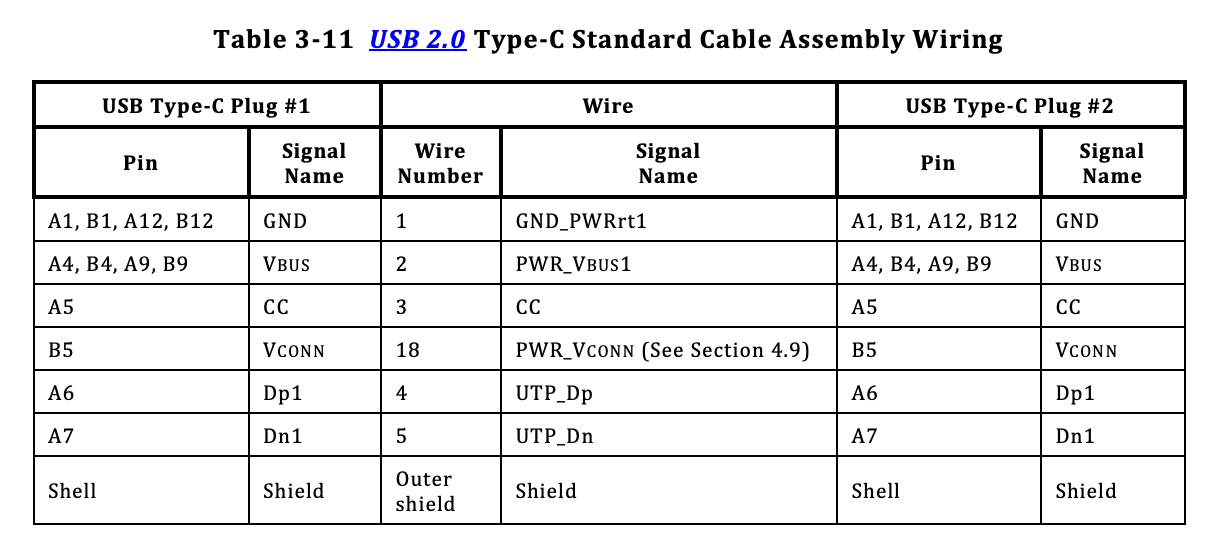
According to the USB-C spec page 37[0], even USB 2.0 C-to-C cables will support USB-PD at 3A (negotiated with the CC wire which is mandatory even on 2.0 C-to-C cables.)
> Some “low wattage” specification USB-C devices are compliant with USB-C but are only compatible with USB-A power bricks because thet require 5V:
This is because they are not USB-C compliant, despite physically featuring a USB-C port. The USB-C spec calls for any USB-C sink (i.e. device that consumes power) to include a pull-down resistor (Rd in the diagram on page 4: https://www.ti.com/lit/wp/slyy109b/slyy109b.pdf?ts=169690039...)
Devices that do not include this resistor, and are therefore unable to be powered with a USB-C to USB-C cable, are noncompliant and should not exist.
> Some USB-C cables are only 31 watts, and some devices can’t charge with less than 60W
The USB-PD handshake is performed independently of the cable, and uses the CC wire that is mandatory even in USB 2.0 C-to-C cables (page 76 of [0]): https://host.zlsadesign.com/Bk62vSMZp.png
You're right about the 60W point. Anecdotally, every device I've ever tried to charge has had no problems at 60W (although of course they'll charge more slowly than if they had 100W), but this is definitely not guaranteed.
4. Yes, all USB-C to USB-C cables can charge at a minimum of 60W which should be sufficient to charge almost anything
5. It depends, but the output capacity is printed on the power supply[0]. (Compare to USB-A, where the most you could do is 12W.)
6. The minimum of the cable (60W for any cable, 100W for some cables, 240W for a very few[1]) and the charger
[0] Annoyingly, this problem is compounded when using a power supply that can output (say) 100W on one USB-C port, but when
both are used, the limit on the two ports is 60W / 40W.
[1] There are vanishingly few products (power supplies, cables, and devices) that support USB EPR. If you have one of these, just use the power supply and cable the device came with; this is no worse a situation than with devices that used proprietary power cables.
That wouldn’t prevent the case of “the module is swapped for one that unlocks no matter what, and upon noticing the phone isn’t unlocking, the owner resets and sets up Face ID again” right?
> Why can't Tesla build their own charging stations
They have. AFAIK, until recently there wasn't any major federal funding for charger installation in the US at least.
> if EVs are so great then why don't some entreprising companies build some charging stations without the taxpayer getting involved?
Because chargers have pretty thin margins and the upfront cost is extremely high (permits, hardware, grid hookup, etc.) It's the same reason there aren't all that many gas station startups.
If a USB-C to USB-C cable only had wires for VCC and GND, here's what wouldn't work:
* Data (this one is fairly obvious)
* Power (since the CC wire in the cable is missing, and a compliant USB-C power source will refuse to output power unless the CC wire is terminated on the other end which signals what type of device it is)