Right now adult Americans can freely chose to live with their parents, and overwhelmingly chose not to.
The article links ownership to costs. Attributing diminishing ownership as "norm float" needs some justification. I suspect multi-generational norms seen elsewhere are rooted in poverty and a lack of opportunity.
Suppose I told you I am losing weight because I cannot afford food, I don't think you should speculate I chose to go on a diet.
Generally agreed. Though, Daniel Tiger and Paw Patrol should be judged differently. Paw Patrol is mindless and addictive.
If you desperately need a distraction, PBS shows are less bad. A few moments of pacification may be worth not disturbing the other airline travelers.
Daniel Tiger may be helpful to parents too. Interacting with children is not intuitive. Techniques from PBS shows have helped me. For example, singing to kids about trying food is move effective than a well reasoned monologue.
In FL, a speed camera can give a car's owner can a ticket without needing to know he was the driver. Your perspective is not true nation wide.
"The registered owner of the motor vehicle involved in the violation is responsible and liable for paying the uniform traffic citation issued for a violation"
Its not safe to cycle for practical purposes in my city.
The city make gestures like painting a few road shoulders green and nature trails for exercise. This does not get me to work, daycare, the dentist, etc.
Generally in America, bikes are more of a novelty than transportation.
I have been to many city council meetings. Stymieing population growth is an explicit goal. The speakers tend to perceive harms from more people as opposed to pure misanthropes.
e.g. "More people creates more traffic so we should prevent housing to prevent people"
Although, I cannot see their true intents. It is possible the speakers do dislike people, which is not politically popular. Expressing their desire requires making up other tangential causes. Hidden agendas creates engineering confusion. If the goal was truly to manage traffic, an engineer would suggest better bus routes.
Yes and no. Lithium metal is the highly reactive element in batteries.
Similar to Hydrogen and Sodium, elements in the first column of the periodic table are highly reactive (flammable) because they readily give away their single electron in the outermost orbital.
Some Lithium battery variants might have marginally safer properties, but they are fundamentally volatile at full charge.
>Medicare should restructure hospice reimbursement to cover more of the hands-on caregiving, thus decreasing the financial burden of dying at home.
The main pitch is somewhat hidden in the middle of the article. Its a tough point to open with, but I think leading with the thesis statement is proper.
>some of the design, planning and early engineering is within the realm of what a professional civil servant could do.
There's nuance to consulting costs. The government GS pay scale poorly accounts for specialized labor. It the government cannot pay to attract talent in a competitive fields, it must instead pay consultants.
Corn makes up more than 10% of global food production. A significant fraction of the world would not 'survive' if those fields of corn suddenly disappeared.
A better example would be specifically corn used for ethanol because driving a car is not essential for survival.
The other two examples seem valid. Replacing part of your meat consumption with corn would reduce the required agricultural land.
The past 40 has seen an increase in housing regulation. NIMBYs create restrictive zoning rules.
Developers can only build after attending dozens of meetings. City council must grant an exception to the NIMBY laws.
Only wealthy developers can afford the process. Various council and board member get kick backs for the exemptions.
Housing is an important example because its the most expensive thing most people purchase. Grift is enabled by individuals electing representatives who oppose construction, not capitalism.
Coping with inflation creates extra taxes. There is no perfect mitigation.
Use your existing dollars to buy non-volatile assets like real estate or gold requires you to pay long term capital gains. Gold mostly keeps a constant value, but the dollar value goes down, and the gold price goes up. That looks like a "profit" and you need to pay 15%, soon to be 20%. Effectively, the effect of inflation decreases by 4/5.
For example. suppose you have $100. Holding it over two years of 2% inflation effectively makes the money worth 96$ = 100/(1.02^2). Instead, if you bought $100 of gold, hold for two years, and sell it for $104, you are taxes on 20% of $4. Your loss is $0.8 instead of $4.
Your need to ask for a raise proportional to inflation, but that puts you in higher tax brackets. Your new dollars over 85k are taxes at 24% instead of 10%. Asking for a raise is very difficult for some people...
No. What you say seems true, but this is a comparison. I would expect other nations to also have pipe etc underground for a hundred years too (probably longer).
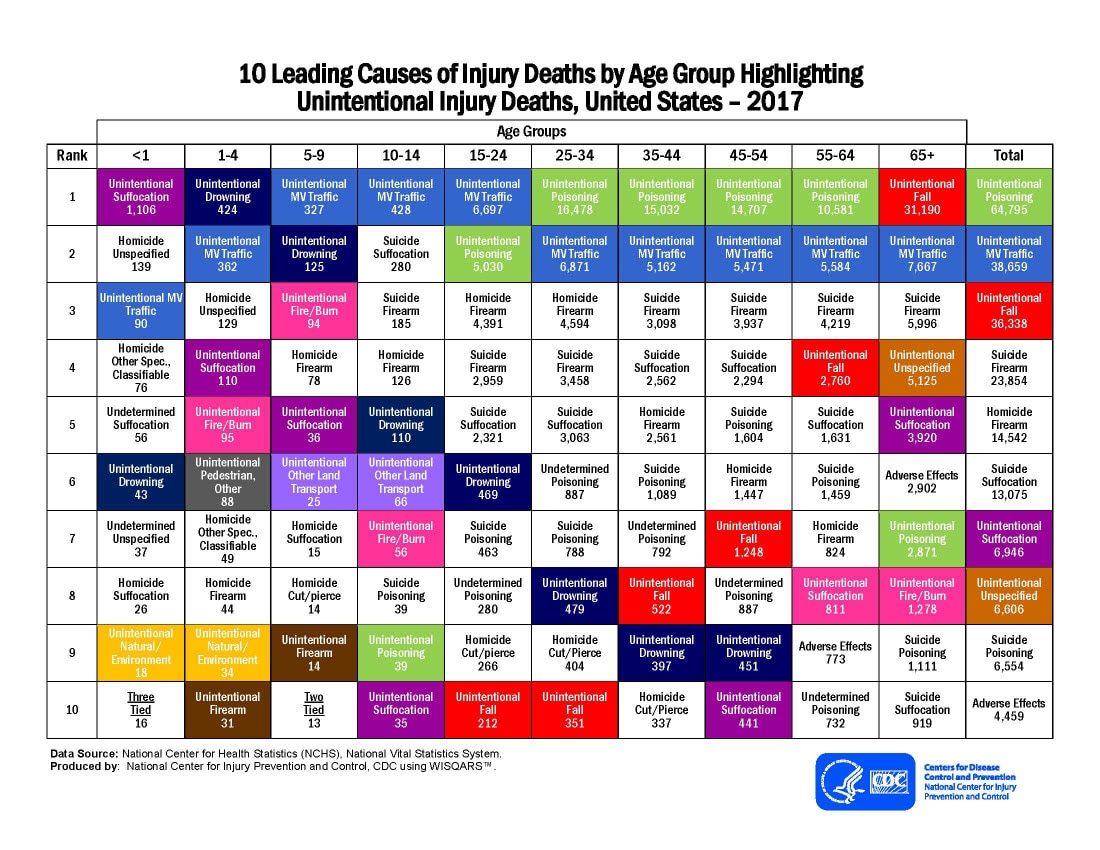
We can restrict cars and build public transit. Cars are the #1 killer of Americans under the age of 25. It only falls to #2 at the next age range because of overdose deaths.
Cars are deadly and inefficient. Electric cars are still cars.
The article links ownership to costs. Attributing diminishing ownership as "norm float" needs some justification. I suspect multi-generational norms seen elsewhere are rooted in poverty and a lack of opportunity.
Suppose I told you I am losing weight because I cannot afford food, I don't think you should speculate I chose to go on a diet.