I also think you're mischaracterizing HDL as a VLDL. If you search for Apolipoprotein A here: https://www.ncbi.nlm.nih.gov/books/NBK305896/ you'll see that HDL is constructed from it, while VLDL and LDL are part of the Apolipoprotein B lineage.
1. When someone consumes fat, bile is released into the gut.
2. Oatmeal (and other soluble fibers like psyllium husk) capture this bile and it is excreted in stool.
3. In order to create the bile, the liver needs LDL. Because the LDL it used to create the bile was lost when it was captured, it exposes more LDL receptors and pulls LDL out of the bloodstream, thereby lowering LDL levels.
It seems to me that in order to maximize the effectiveness of this LDL-lowering approach, one must not simply consume psyllium or oatmeal, but rather consume them in conjunction with fat. Not saturated fat, obviously, which raises LDL, but perhaps unsaturated or polyunsaturated fats. My expectation is that this would trigger the bile secretion required in order to actually sequester it.
I'm not sure. It seems like the harder they squeeze, the less they can hold onto. Books, movies, TV shows, audiobooks, music - you can find it all online for free and acquire it pretty safely (torrents/vpn etc). I think the only thing they can really sell us is convenience - and I buy it! But if that convenience is lost to fragmentation, or lack of offline availability (e.g., books), or price, I think people will stop paying and do the more convenient thing. There's a tension there that I don't think they can ignore.
Until we get robots with really good hands, something I'd love in the interim is a system that uses _me_ as the hands. When it's time to put groceries away, I don't want to have to think about how to organize everything. Just figure out which grocery items I have, what storage I have available, come up with an optimized organization solution, then tell me where to put things, one at a time. I'm cautiously optimistic this will be doable in the near term with a combination of AR and AI.
I love the idea of open source hardware, but one issue I struggle with is - what happens when one or more components go out of production?
I suppose one solution is that the maintainers could update their component list (which might involve more than one component because of compatibility issues?). But what if I'm in the middle of purchasing the components only to discover I can't get them all? Maybe the maintainers could sell component kits? That might be a nice way to fund their work. Not sure if that would run into issues with IP laws, though.
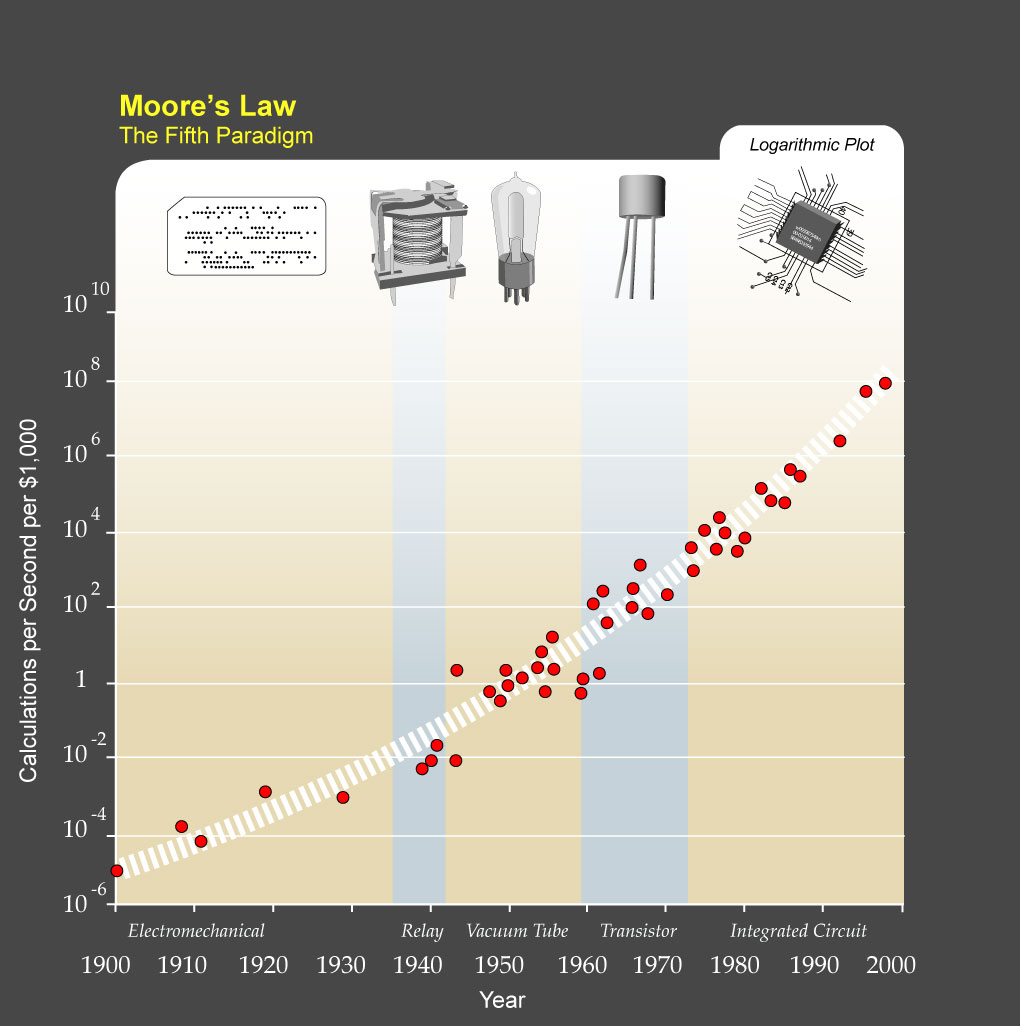
> Moore waited at least five years [1] before deriving his law.
OpenAI has been around since 2015. Even if we give them four years to ramp up, that's still five years worth of data. If you're referring to the example he gave of token cost, that could just be him pulling two points off his data set to serve as an example. I don't know that's the case, of course, but I don't see anything in his text that contradicts the point.
> I don't think that it makes much sense to compare commercial pricing schemes to technical advancements.
Can anyone help me understand how this works without special bitnet precision-specific hardware? Is special hardware unnecessary? Maybe it just doesn't reach the full bitnet potential without it? Or maybe it does, with some fancy tricks? Thanks!
> We aim to investigate in a reliable animal model whether activating the cervical lymphatic vessels through pharmacological or mechanical means can prevent the exacerbation of Alzheimer’s disease progression by improving CSF clearance.
Any speculation on what those mechanical means might be?
Yes, simply accepting the inadequacy of our current technology is always going to be easier than working to improve it. It's also going to lead to infinitely less progress.
Humanity is eventually going to be able to extend lifespans indefinitely. Whether that happens sooner or later depends on how many people decide not to go gentle into that good night.
Seems like this is some kind of legal inevitability that is acknowledged to be counter-productive:
> The IASDA report stresses: “There is concern that this decision may cause consumers to mistrust vitamin D supplementation, which will be particularly problematic given the high prevalence of vitamin D deficiency among the population."
and
> “Even after ANSES publicly stated that while formally correct, the listing would be counterproductive, this legal mechanism proved impossible to stop,” he adds.
I love this direction. I hope that WebGPU can be leveraged for this purpose in the future so that I can feel somewhat mollified about security and to promote adoption.
I don't think that's correct: https://en.wikipedia.org/wiki/Enterohepatic_circulation
I also think you're mischaracterizing HDL as a VLDL. If you search for Apolipoprotein A here: https://www.ncbi.nlm.nih.gov/books/NBK305896/ you'll see that HDL is constructed from it, while VLDL and LDL are part of the Apolipoprotein B lineage.