Disney created the character and was able to profit from it for years, but Disney has equally profited over characters it didn't create but instead created their own adaptations. Why should other companies be denied the same thing Disney had access to?
Depends imo. If it's purely just a few static pages then yeah I can see this happening but as soon as you have anything like a blog you're going to want some sort of content management system surely to manage it?
What I see this more doing is eliminating the need for someone to code the glue between the CMS and the website -- you can just ask the AI to add code to get your blogs from Contentful
Probably why, like the article says, they're planning to add that
> In an attempt to address the issues with open-source licensing, GitHub plans to introduce a new Copilot feature that will “provide a reference for suggestions that resemble public code on GitHub so that you can make a more informed decision about whether and how to use that code,” including “providing attribution where appropriate.” GitHub also has a configurable filter to block suggestions matching public code.
> It's been clearly displayed that these tools are emitting verbatim copies of existing code (and its comments) in their input.
Which makes sense when you consider that the sort of code that is getting reproduced verbatim is usually library functions which developers may copy and paste verbatim comments and all into their project, especially when you prompt the AI with the header of a function that has been copied and pasted often, so the weightings will in that instance be heavily skewed towards reproducing that function
> Due to the insidious tax policy of withdrawing the personal allowance when income reaches £100K
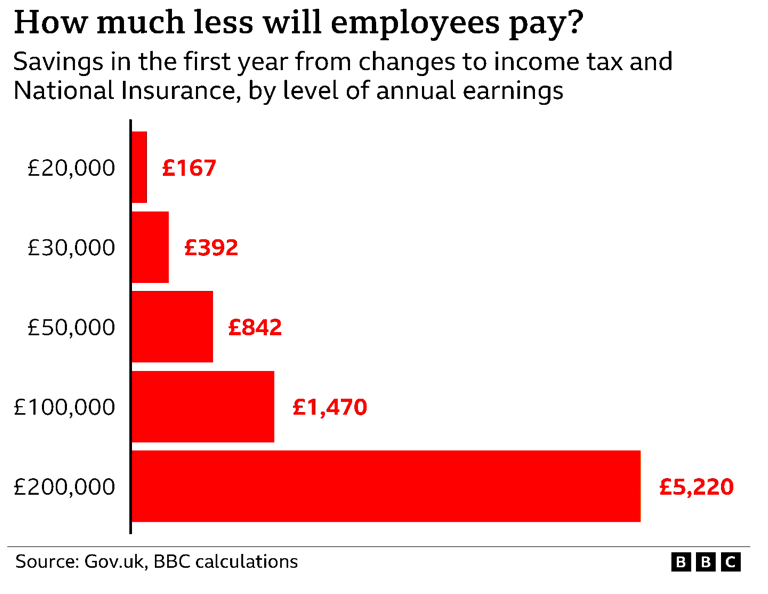
The affect of removing that doesn't seem to be that major, with the figures [1] appearing to work out at almost 1.5% less tax for those on £100k, and a little over 2.5% less tax for those on £200k -- hardly a huge decrease in the tax burden for those people.
See, maybe this is just a cultural difference but I definitely know unionized people who have taken on responsibility outside their formal JD
And I've definitely heard of non unionised companies with rigid roles like that where the middle managers liked having defined roles with little room for taking on additional responsibilities.
The difference between the two IMO is if the union has shit representatives you _can_ work with colleagues to get a different union rep as it's democratic when implemented correctly, whereas with a crap management you only have the option of moving job, so at least with a more unionised workforce you can do both.
The "left" is no more immune to controlling thought than the right -- just look at China or the USSR
The danger is authoritarianism and centralisation, and in terms of centralisation big tech companies like Spotify have in spades. You could also feasibly argue they're authoritarian as no-one outside the company can influence policy outside of free market forces, but centralisation can make these companies somewhat immune to said forces, for instance Spotify being the exclusive distributor of Joe Rogan podcasts means those interested in his content have no choice but to continue using Spotify, even though some of his podcasts have been removed.
> Because you know what happens when private property is abolished? Spoiler, only the well connected and powerful will hold private property
If only a few people can own private property then you haven't abolished private property, you've just limited who can own it.
This was the main issue caused by the massive state control of Marxist Leninist countries like the Soviet Union -- by centralizing all control within one single political party you essentially just replace an economic elite with a political elite. Couple that with the democratic centralism you often find in these single party ML countries and suddenly you have something that's a lot less like the communal living the OP was referring to.
I'm not saying abolishing private property will be some magical fix all, but I also don't think using the soviet union as an example of why it won't work is a good example. You could have a society where usage of resources is governed by consensus rather than "lol stalin said so" but consensus is obviously a lot harder to do on a global scale than a small communal village
Having to jailbreak an iPhone is what makes the iPhone more work -- Termux is a single install and works on stock Android, and comes with a package manager
I'm not too sure about that, what about the support for DX12 in WSL? Can't deploy that to production outside WSL right now as far as I'm aware, unless they add DX12 support to azure Linux vms...
Main difference with Vercel / ZEIT is that unlike Netlify, it can more easily have SSR pages.
So like if you're using NextJS for instance, on Netlify you can only really use the static site generation features of NextJS, whereas with Vercel you have SSR pages as well as the API functions.
They have some legitimate reasons for the Gatsby specific CSS -- specifically because everything needs to be available at build time, and I assume the prismjs library depends on browser APIs that may not exist at build time.
It's also not too surprising to hear that it doesn't support code highlighting out of the box in React given it's a plugin for Gatsby's remark plugin.